
Football Trips to Liverpool
Football Trips to Liverpool

 17-10-2026 12:30
The first chant often reaches you before the floodlights do. For us, a football trip to Liverpool is a neighbourhood ritual: Liverpool FC, Anfield Stadium and thousands walking the same red route. Since 2008, we’ve helped over 50,000 travellers enjoy football weekends across Europe, combining flights, carefully selected hotels, official match access and our ticket guarantee, so the build-up can take centre stage.
Why Anfield Stadium pulls you in
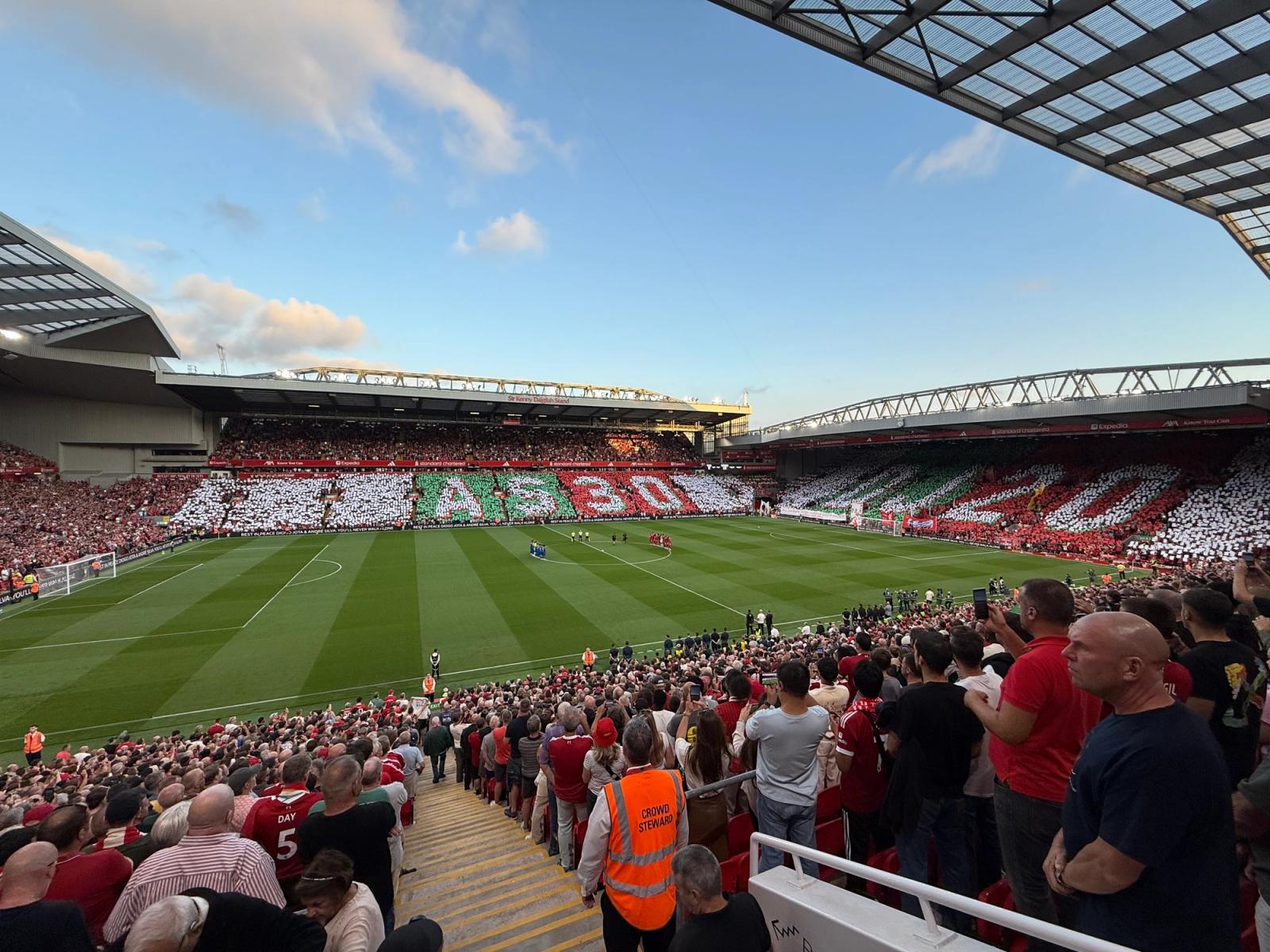
The reason to travel is not only the 90 minutes. It is Walton Breck Road filling with scarves, the smell of hot food outside the turnstiles, murals on brick walls and the first notes of a song that makes strangers look at one another differently. Our packages for Liverpool FC at Anfield Stadium are built around that feeling, not just a seat inside the ground.
Liverpool FC arrive with serious weight: 20 English top-flight titles, including the 2024–25 Premier League title, six European Cups/Champions League titles and a record 10 League Cups. Yet Anfield Stadium, with its 61,276 capacity, still sits tightly among terraced streets. That closeness is why football in Liverpool feels so immediate; the whole area seems to lean toward kick-off.
Streets before the whistle
Arrive three to four hours before kick-off and let the district change around you. The final approach usually comes along Walton Breck Road or Anfield Road, but the best moments often happen slightly to the side: a family photo near a painted wall, a vendor calling out, a song starting somewhere behind you. It is the kind of slow build-up that makes our Premier League trips in England feel bigger than a fixture list.
- Oakfield Road is where the old stories begin, especially if you start near The Sandon and wander toward the ground with the crowd.
- Sybil Road and Randolph Street are perfect for the mural walk, including the Trent Alexander-Arnold artwork linked to the 2019 Champions League win.
- Paisley Square and Anfield Road host official fan zones with live entertainment, screens, food, drink, activities and retail before the game.
- Stanley Park gives the walk a brief pocket of green before the red brick and raised voices pull you back in.
- Homebaked Bakery, opposite the ground, is community-owned, reopened in 2013 and known for The Shankly and The Scouse pies.
For travellers comparing different weekends, budget-friendly football weekends can still deliver this same neighbourhood rhythm when the timing is right.
Pints, pies and origin stories
The Sandon on Oakfield Road sits around 0.2 miles from the ground and calls itself the birthplace of Liverpool FC. The origin story belongs in every pre-game conversation: another club had played at Anfield Stadium, left after the John Houlding dispute, and Liverpool FC was founded on June 3, 1892. Even more surprising, that earlier tenant won the First Division in 1891 while based at the same ground.
- Start with The Sandon if you want the creation tale right under your feet.
- Drift to The Arkles on Anfield Road when a bigger game brings sharper edges and travelling voices.
- Try Taggy’s Bar & Beer Garden when you want music, colour and a busy outdoor buzz.
- The Flat Iron, The King Harry and Hotel TIA each give the afternoon a slightly different local flavour.
The key is not to rush between every doorway. Choose one or two stops, arrive early and let the streets set the pace. For supporters drawn to divided cities and family rivalries, derby weekends bring a special charge long before the teams appear.
The Kop, the song and the nights to chase
“You’ll Never Walk Alone” is not background music here; it is the emotional peak before the first tackle. Liverpool FC trace its Anfield Stadium origin to the early 1960s, when Gerry and the Pacemakers’ version was played before games. When it later disappeared from the playlist, supporters reportedly asked, “Where is our song?” and kept singing it themselves.
- Be inside early, scarf ready, because the anthem belongs to the minutes before kick-off.
- The Spion Kop was built in 1906 after Liverpool FC’s second league title, once held around 25,000 supporters and was roofed in 1928 to help carry the noise.
- Today it is seated, yet it still represents the identity of the club’s most vocal followers.
- The city derby feels hyper-local: red and blue families, Stanley Park, shared streets and pride passed down at home. The first official meeting came on October 13, 1894, across the park, ending 3–0 to the blue half; five weeks later at Anfield Stadium, the sides drew 2–2.
- The north-west rivalry with another English giant is a meeting of two of the country’s most successful football institutions.
- European evenings matter because of Liverpool FC’s six European Cups/Champions League titles and the comeback mythology that follows the club. Our Champions League nights capture that under-lights tension.
- Domestic cup weekends can carry their own spark, from FA Cup weekends to Carabao Cup trips, especially when the draw brings a lively opponent.
Big Premier League fixtures can be harder to secure, but even a regular league game rewards those who follow the full ritual. Walk the roads, hear the chorus rise, and let Liverpool’s red neighbourhood carry you from the streets to the song.