
Football Trips to Wolverhampton
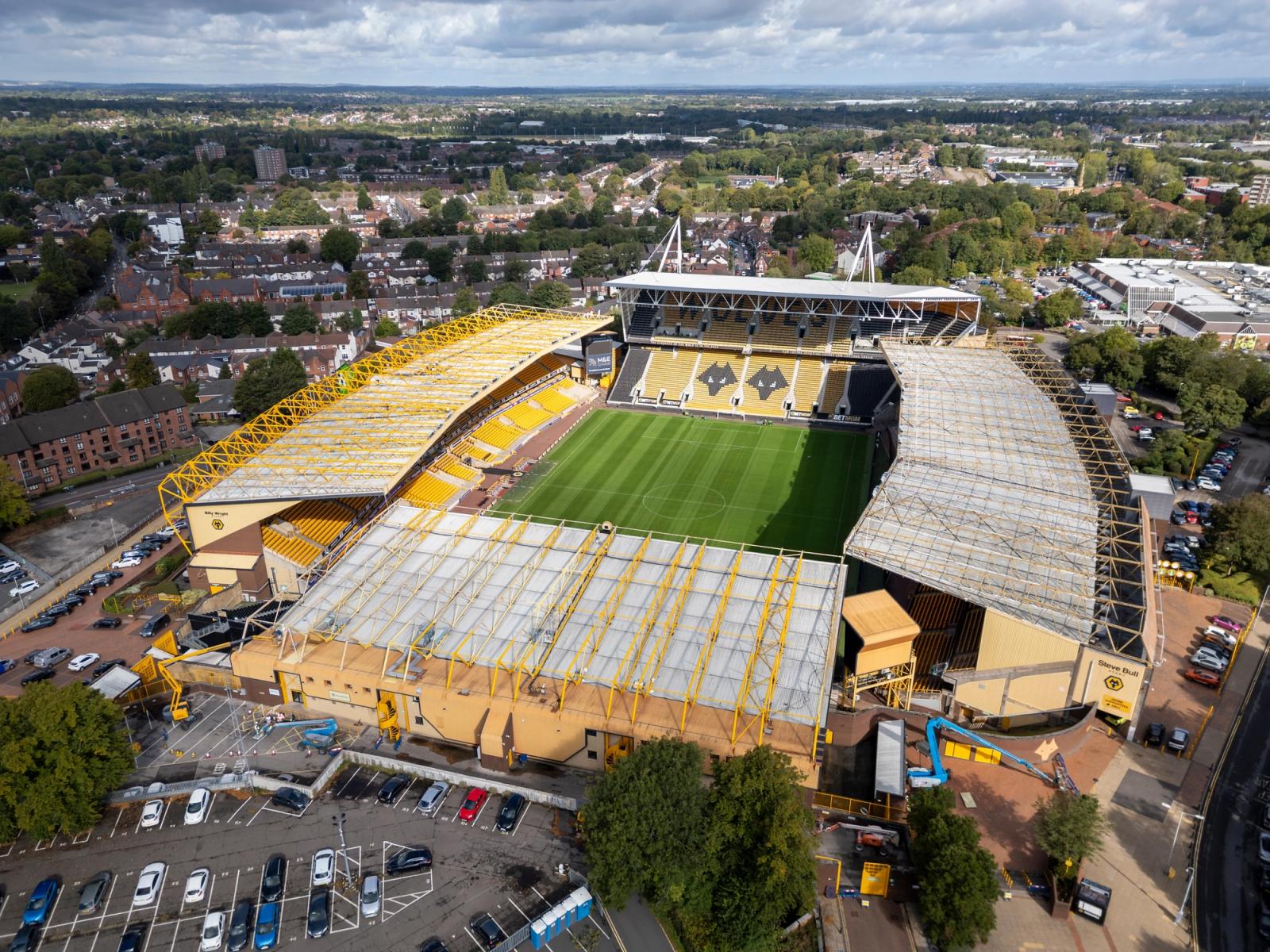
Gold shirts spill through the centre, songs bounce off brick walls, and Molineux Stadium glows above the ring road. Our football trips to Wolverhampton are compact, gritty, and wonderfully local: flight, hotel and match access arranged in one secure package, with our ticket guarantee included. Since 2008, we have sent over 50,000 fans into football weekends like this, where the Black Country feels close enough to touch.
Follow the gold shirts to Molineux
Wolverhampton, known to generations of supporters as Wolves, is not a city that hides its football. The club colours, black and gold, echo the civic motto: “Out of Darkness Cometh Light.” That line feels made for a Saturday walk towards Molineux Stadium, especially when the floodlights cut through the early evening.
This is a proper Black Country football setting: walkable, loud in the right corners and rooted in English tradition. Molineux Stadium has been Wolverhampton’s home since 1889 and now holds around 31,700. With our packages for a football trip with Wolverhampton, the planning is handled before you arrive, so the trip can begin with the first song rather than a search for separate arrangements.
- It suits fans who want a classic English ground within easy reach of the city centre.
- The old-gold crowd gathers early, especially along the roads leading up to Molineux Stadium.
- For travellers drawn to English top-flight weekends, Wolverhampton offers a rawer, more local rhythm than many larger destinations.
First pint, first songs
The build-up starts in the centre, where there are around 50 pubs within one mile of Molineux Stadium. Lych Gate Tavern at 44 Queen Square is a favourite opening stop, with a Georgian frontage from 1726 and older timber-framed sections behind it. From there, the natural flow moves towards Waterloo Road, where scarves thicken and “Hi Ho Wolverhampton” begins to rise.
North Street Social, roughly 0.4 miles from Molineux Stadium, brings a livelier pre-game buzz, while The Leaping Wolf at 107 Waterloo Road sits very close to the ground. The Molineux Fan Zone, next to the subway and the Sir Jack Hayward Stand, is another easy place to join the crowd before stepping inside. If you like shorter UK escapes, our football trips with a tighter travel window fit this kind of weekend well.
- Start at Lych Gate Tavern if you want old walls, local chatter and a gentle first round.
- Drift along Waterloo Road when the shirts begin to form a moving ribbon of gold.
- Pause at the Fan Zone if you want music, food and that final burst before the turnstiles.
- Keep The Leaping Wolf in mind for the last stop before the ground comes into full view.
Inside Molineux’s old-gold glow
Molineux Stadium still feels like four football stands facing one another, not a sealed entertainment bowl. That is part of its pull. The South Bank, officially the Sir Jack Hayward Stand, is traditionally the loudest home area, while the Stan Cullis Stand redevelopment on the North Bank was completed in 2012 and gives the ground a sharper northern edge.
Arrive early. Watch the seats fill, hear the first chants roll down the tiers and look for tributes around the stadium area to Billy Wright, Stan Cullis and Sir Jack Hayward. On the concourse, a Pukka Pie feels right in your hand before the gold shirts shine under the lights. Nights in the English cup calendar can bring an extra spark here, while midweek cup dates often give Molineux Stadium a special floodlit bite.
- The capacity is around 31,700, which keeps the noise tight and close.
- The club has played here since 1889, so every corner carries a layer of memory.
- Under the lights, the black-and-gold palette looks made for winter football.
The night that shaped Europe
On 13 December 1954, Wolverhampton hosted a famous Hungarian side featuring Ferenc Puskás and several stars from Hungary’s great national team. The visitors led 2–0, yet Wolverhampton fought back to win 3–2. The result, played beneath the Molineux floodlights, helped fuel calls for a continental club competition, leading towards the European Cup and, later, the UEFA Champions League.
That same year, Wolverhampton shifted to a brighter gold shirt shade so the players were easier to see under floodlights. In 2024, a permanent sculpture was unveiled on Waterloo Road to mark that landmark European evening. Look for it during the stadium walk; it turns a normal approach into a small journey through football history, especially on a Wolves football trip built around the old-gold glow.
- Ferenc Puskás gives the story its global name.
- The comeback gives it drama.
- The floodlights give it theatre.
- The European Cup origins give the evening a place far beyond the Black Country.
After the final whistle
When the game ends, stay close to the ground and let the city slow down around you. Orange chips, made with a thick orange-coloured batter, are a Black Country speciality. You may also hear locals talk about cobs, meaning rolls or sandwiches. Faggots with mushy peas, pork pies, hot meat cobs and Black Country ale all belong to the same post-game world.
The fiercest local fixture is the Black Country derby against nearby rivals around 11 miles away. The first meeting was on 20 January 1883, both clubs became founding members of the Football League, and the 1954 Charity Shield at Molineux Stadium finished 4–4 in front of 45,000 spectators. For fans who travel for rivalry, our derby trips across Europe show how powerful local pride can be.
If time allows, the standard Molineux stadium tour lasts around 90 minutes and includes the Wolves Museum. Matchday tours run for about 45 minutes, subject to availability. Inside, the story stretches from Billy Wright and Stan Cullis to Sir Jack Hayward and Steve Bull, who scored 306 goals. It is a fitting final chapter before heading home from one of England’s most distinctive football weekends.