
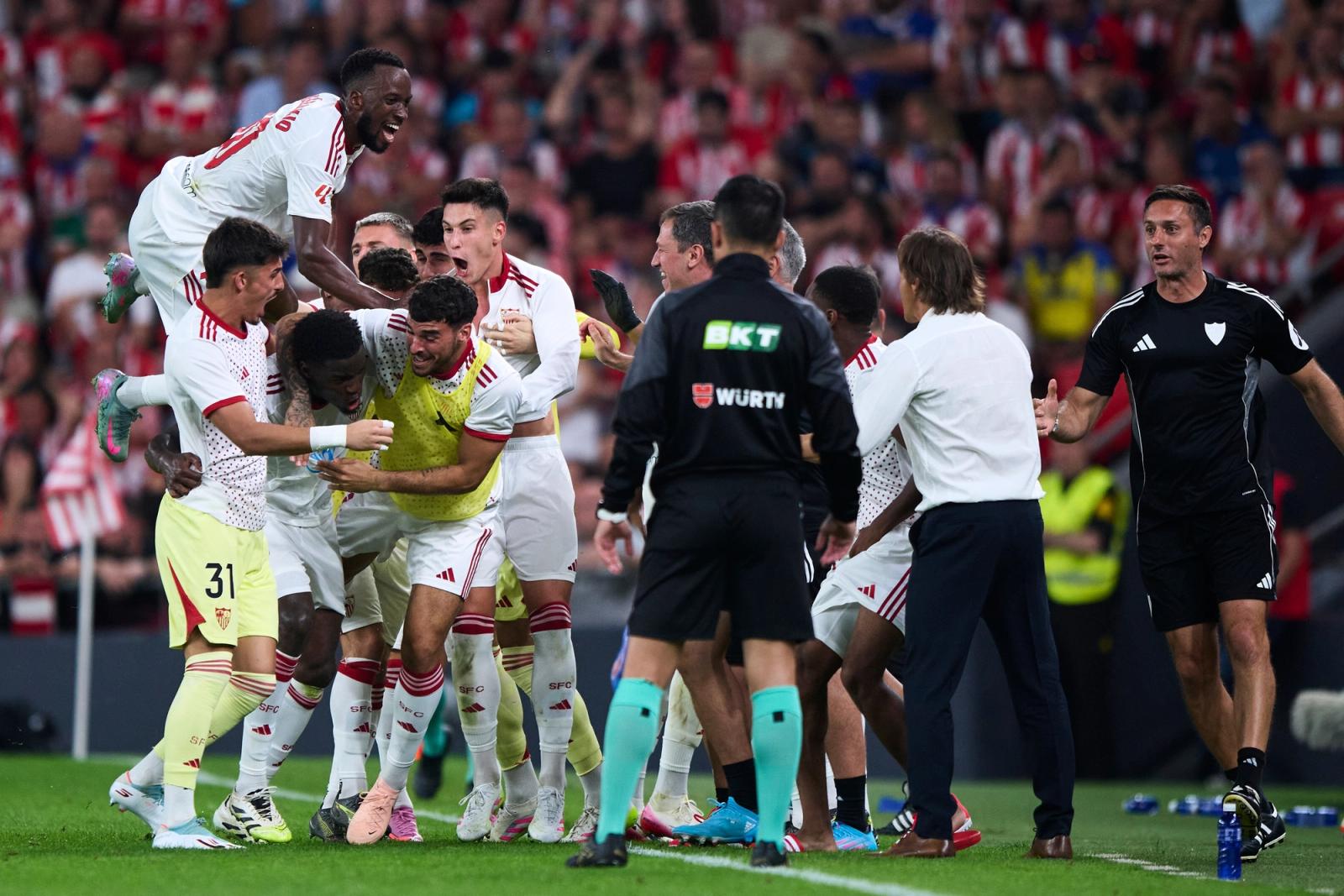
Football Trips to Seville
Red-and-white shirts appear in Nervión long before the floodlights matter. Terraces fill, scarves hang from shoulders, and the walk to Estadio Ramón Sánchez Pizjuán starts to feel like part of the game itself. On our football trips to Seville, we arrange flights, selected hotels and official match access with a ticket guarantee, just as we have for more than 50,000 travelers since 2008.
Nervión before the roar
The Estadio Ramón Sánchez Pizjuán sits in the Nervión district, folded into daily city life with shops, cafés, apartment blocks, terraces and local bars all around it. For a trip built around Sevilla, this is where the day really begins. Nervión Plaza is an easy landmark, but the better rhythm is found drifting towards Calle Luis de Morales, Avenida de Eduardo Dato and Calle Benito Mas y Prat.
Locals call the build-up la previa Sevilla: a few drinks, quick plates, arguments over the line-up and that slow rise of anticipation. Arrive several hours before kick-off and let the area set the pace rather than turning the afternoon into a checklist.
- Start near Nervión Plaza, then follow the red shirts rather than a map.
- Expect small cold beers, cured meats, cheese, stews, montaditos, fried fish and shared plates passed across busy tables.
- Peña Cultural Sevillista San Bernardo at Calle Ventura de la Vega 2 is a local meeting point with around 300 members.
- If you like trips with a local edge, our more affordable football breaks and less obvious football weekends often fit this kind of journey perfectly.
Inside the Bombonera de Nervión
Opened in 1958, Estadio Ramón Sánchez Pizjuán holds around 42,714 fans and replaced Sevilla’s former nearby home. It is named after former president Ramón Sánchez Pizjuán, and LaLiga calls it the Bombonera de Nervión for a reason: the place feels tight, steep and loud. This is not an out-of-town arena. It is urban, red, close to the pitch and built for noise.
Be inside 20–30 minutes early. The Himno del Centenario, written by El Arrebato in 2005, reached No. 1 in Spain and still turns the final minutes before kick-off into the emotional peak of the day. Scarves rise, Gol Norte drives the singing, flags move, drums roll, and the whole bowl carries the sound. For many travelers, this is the moment a La Liga football trip becomes unforgettable.
- The steep seating keeps the action close, even when the game slows down.
- Gol Norte gives the soundtrack, but every side adds to the volume.
- The red interior makes the home colours feel almost constant, from warm-up to final whistle.
Sevilla’s European soul
Sevilla are known as the Kings of the Europa League, and that pride runs through the club even on an ordinary league evening. The side has won the UEFA Cup and UEFA Europa League seven times, with UEFA noting a perfect record of seven wins from seven finals in the competition. European fixtures are especially tempting when available, but a domestic game still carries that continental confidence.
The roots go back to 25 January 1890, linked to Scottish workers, locals and Burns Night. On 8 March 1890, Sevilla won the first recorded football match in Spain, beating a side from Huelva 2–0. For a deeper layer, the SFC History Experience lasts around 1 hour 30 minutes and usually includes the tunnel, dressing room, benches, pitch area and club store. Some fans also combine the city with trips featuring more than one game.
- If Europe is on the calendar, the city seems to sharpen after dark.
- If it is a league weekend, the same trophies still shape the songs and conversations.
- For a wider Spanish route, football breaks in Seville can be the centrepiece of a longer stay.
A city divided in red and white
Seville’s football culture is intense because identity is split across neighbourhoods, families and generations. El Gran Derbi has shaped conversations for more than a century, and LaLiga records 120 meetings across the top two divisions. Even if your football weekend in Seville is not built around the derby, understanding the rivalry helps you read the colours in windows, the jokes at the bar and the tension before a big Saturday.
The rivalry has produced moments locals still bring up: a 4–2 away win at the Pizjuán in 1958, a wild 5–3 game in 2018, and Sevilla’s 2013/14 European knockout victory on penalties. Treat supporter spaces naturally and respectfully; this is part of everyday life here. For travelers who love local edge, our derby-focused football trips show why these fixtures live far beyond the scoreboard.
By the time the anthem fades and the first challenge snaps in, the day has already given you Nervión’s terraces, the walk, the colours and the roar. That is the beauty of a football city break in Seville: we handle the package, and the city does the rest.