
Football Trips to Berlin
Football Trips to Berlin

 24-10-2026 13:00
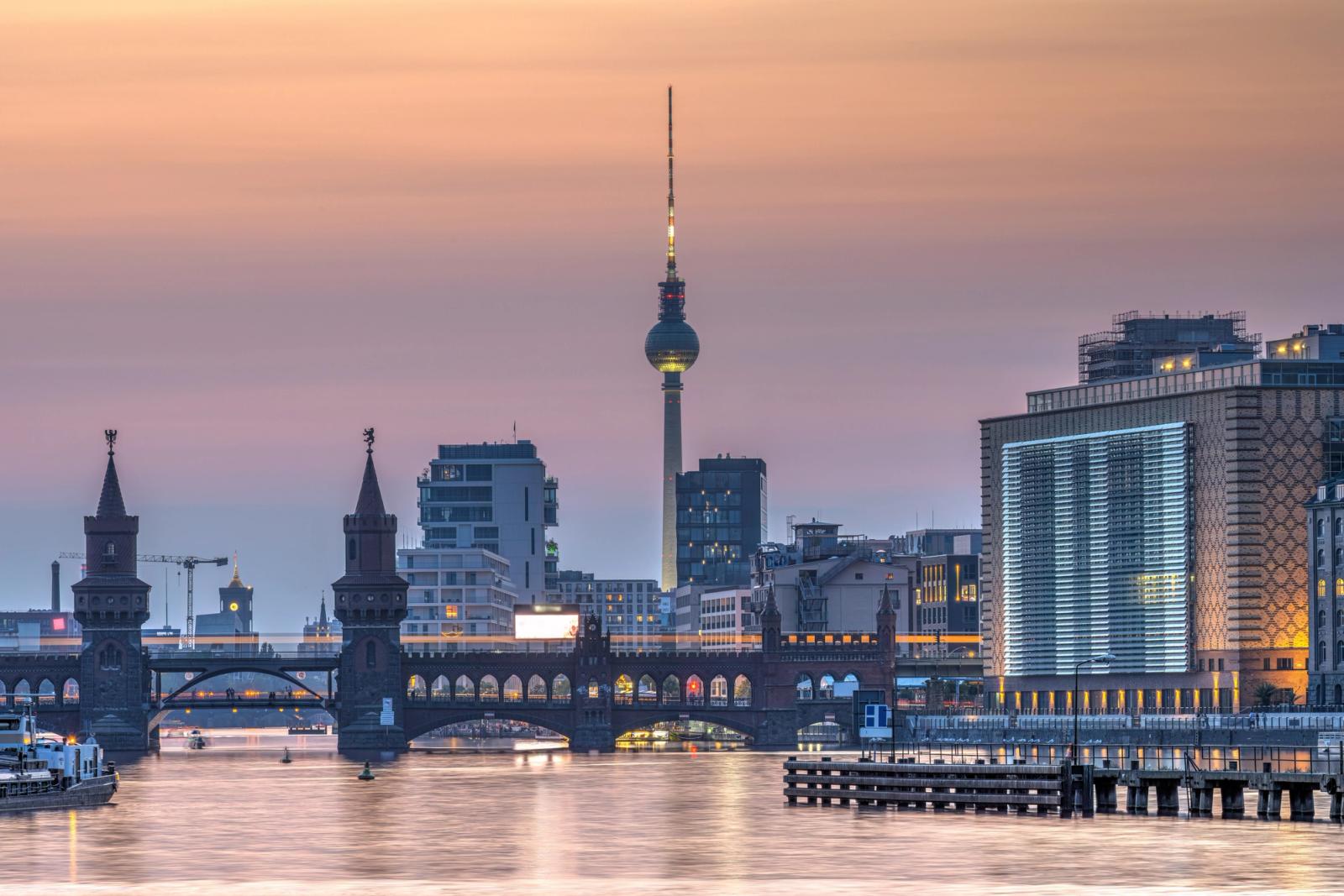
Berlin changes tone between districts, and that is exactly why a football trip to Berlin can feel like two journeys in one. We take fans from Hertha Berlin’s blue-and-white ritual at the Olympiastadion to the forest-edged roar around Stadion An der Alten Försterei. Stadion Maksimir belongs in Zagreb, not Berlin; here, the focus is the capital. With our ticket guarantee and 50,000+ travelers since 2008, the details are handled.
Two Berlins, one football weekend
A Berlin football weekend works because the contrasts are real without being simple. Westend gives Hertha Berlin a grand, open setting, where the Olympiastadion holds 73,856 spectators and the walk in already feels ceremonial. Köpenick offers something tighter and rougher around the edges, with Stadion An der Alten Försterei holding 22,012 fans, including 18,395 standing places.
We build German football travel in the capital around the rhythm of the fixtures, while Berlin’s second-tier calendar can open up another side of the city. This is not just east versus west. It is layered streets, shifting identities, old loyalties and new weekends colliding.
- If the schedule allows it, a Berlin derby adds another charge to the journey, with the city’s football map suddenly feeling much smaller.
- The Olympic scale in Westend suits travelers who love big entrances, wide concourses and songs rolling through a vast bowl.
- The forest-side visit in Köpenick is for those who want shoulder-to-shoulder noise, smoke from grills and a local pulse before kick-off.
Hertha at the Olympiastadion
A Hertha Berlin football trip is built around scale. Hertha Berlin have played at the Olympiastadion since the Bundesliga began in 1963, apart from 1986 to 1988. The venue opened on 1 August 1936, staged World Cup games in 1974 and 2006, and has hosted the DFB-Pokal final every year since 1985.
Jesse Owens won four Olympic gold medals here in 1936, and that memory still sits beneath the blue-and-white chants. The Ostkurve drives the sound, and “Ha Ho He” cuts through the air before the first whistle. We include official access through our partners, and our ticket and match guarantee keeps the sporting part secure while we arrange the flight and hotel in one package.
- Before the game, Preußisches Landwirtshaus on Flatowallee brings German cooking, a beer garden and a charcoal grill on event days.
- Outside the arena, currywurst is part of the ritual, especially from Ollie Brandt, who has sold fast food there for more than 40 years.
- The wider second-tier football calendar in Germany makes Hertha’s home dates even more appealing for fans who enjoy tradition with a sharp competitive edge.
Forest paths and standing terraces
Stadion An der Alten Försterei is the intense counterpoint. It has been the home ground since 1920, and the name comes from the nearby old forester’s lodge. In 2008/09, more than 2,300 volunteers helped rebuild the venue, contributing around 140,000 working hours. That effort is still felt in the concrete, rails and songs.
The route often starts around S Köpenick before continuing via Waldweg, where the trees make the approach feel unlike anywhere else in major German football. Abseitsfalle Fankneipe on Hämmerlingstraße is a key local stop, and this kind of setting is exactly why we feature unusual football weekends alongside classic city fixtures.
- Food is simple and smoky: Bratwurst, Krakauer in bread rolls and kettle goulash when the cold rolls in.
- Berliner Pilsner is the familiar drink on warmer days, while Glühwein appears when winter bites.
- Neutral or local colours are the safest choice, and maroon or burgundy is best avoided because of a fierce local rivalry tied to those shades.
- For fans drawn to tension between neighbours, our rivalry trips across Europe show how different cities turn football into civic theatre.
Beyond Berlin: Maksimir context
Stadion Maksimir is not in Berlin; it is in Zagreb, Croatia. It opened on 5 May 1912, and the club now associated with it became its host in 1948. The Bad Blue Boys are central to its story, with their name inspired by the 1983 film Bad Boys. Since 1994, a memorial near the west side has honored supporters killed in the Croatian War of Independence.
That makes Zagreb a separate idea within smart European football packages, not an add-on to Berlin. Our role is to make each journey feel complete, from flights and hotels to official match access, shaped by the care described in our story since 2008. Berlin gives you two worlds in one weekend; Maksimir waits for another chapter.