
Roma vs Lazio Tickets
Roma vs Lazio billetter

 17-04-2027
Rome does not simply host this fixture. It splits into two voices inside the same stadium. Yellow-red against white-blue, wolf against eagle, south against north. Anyone searching for roma vs lazio tickets is stepping toward one of Italian football’s most emotional rivalries: the Derby della Capitale at the Stadio Olimpico.
Why Roma and Lazio clash
The Roma vs Lazio rivalry is really an argument about identity. Who belongs to Rome? Who carries its memory? Who has the right to claim the city’s soul?
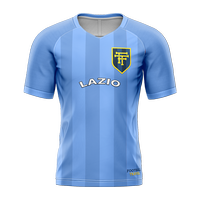
Lazio came first, founded in 1900 as Società Podistica Lazio in Piazza della Libertà. Their eagle, still one of the most recognisable symbols in Italian football, reaches back to Roman imperial imagery. It gives the club a proud, independent feel: older, separate, never absorbed.
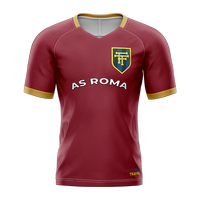
AS Roma arrived in 1927 through a merger designed to create a powerful Roman club capable of challenging the dominance of the north. The name, the red-and-yellow colours and the Capitoline Wolf were chosen as direct symbols of the capital. Roma were built to represent the city in name and image.
Lazio refused to join that merger. That decision still echoes through the rivalry. Roma became the club with the city’s name. Lazio held onto the pride of being older and untouched. From there, the divide hardened: Lazio linked with northern, more middle-class districts such as Prati and Parioli; Roma’s mythology growing from working-class Testaccio. The great football derbies often begin like this, not with a scoreline, but with a question of belonging.
Roma vs Lazio at the Olimpico
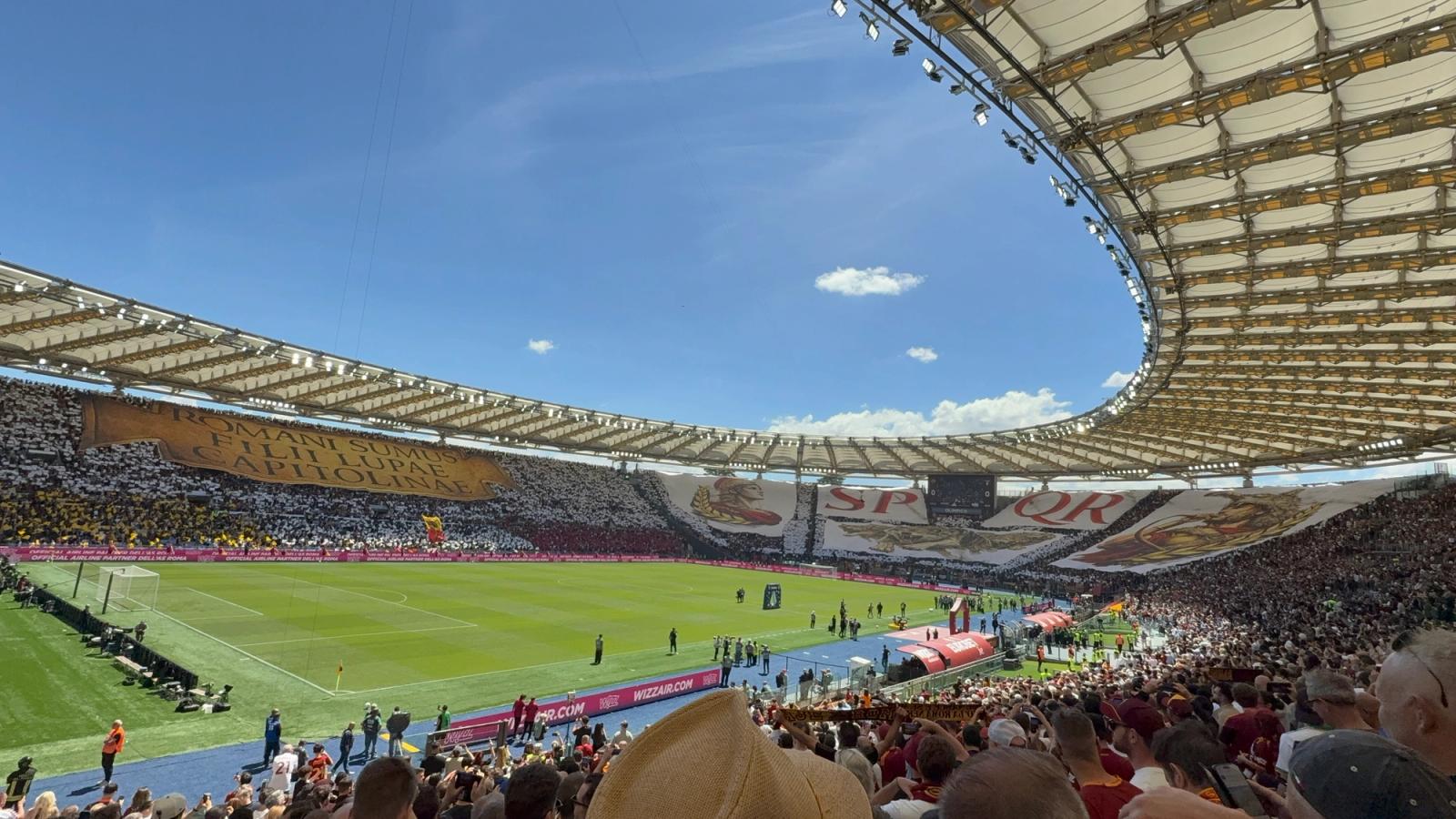
The Stadio Olimpico makes the Derby della Capitale feel different from most rivalries. There is no simple home or away. The same bowl is divided, claimed and transformed. Roma’s most passionate support gathers in the Curva Sud. Lazio’s emotional base rises from the Curva Nord. Between them sits a city arguing with itself.
This is where the fixture becomes theatre. Giant coreografie unfurl. Flags ripple. Banners deliver sharp Roman sfottò, that cutting, theatrical mockery that turns a phrase into a weapon. Songs roll around the concrete: “Roma Roma Roma” from one side, “Vola Lazio Vola” from the other. The football culture in Rome is never abstract on this day. It is colour, noise, memory and nerve.
The occasion also carries a darker memory. In 1979, Lazio supporter Vincenzo Paparelli was killed before a derby. His name remains part of the fixture’s history, a reminder that passion here has sometimes crossed into something more volatile. That shadow does not define the meeting, but it gives the intensity a serious edge. The most unique football experiences are often powerful because they contain joy, tension and responsibility all at once.
Scars that never fade
Some games become permanent marks. On 10 March 2002, Roma delivered one of their great derby nights. Vincenzo Montella’s “Aeroplanino” celebration and Francesco Totti’s chipped finish turned that evening into folklore. For Roma fans, it is remembered as dominance. For Lazio supporters, it remains a wound still mentioned because of the scale of the defeat.
Then came 26 May 2013, the Coppa Italia final. The only Rome derby with a major trophy directly at stake. Senad Lulić scored for Lazio in the shared stadium, and one date became legend. For Lazio, “26 May” means silverware, supremacy and a moment frozen forever. For Roma, it is one of the deepest scars in the rivalry.
That is why the Serie A stage feels different when these two meet. The Derby della Capitale is not only about ninety minutes. It is family memory, neighbourhood pride, old songs, old pain and a stadium split into two living halves. Roma and Lazio do not just play each other. They force Rome to look in the mirror.