
Manchester United vs Manchester City Tickets
Manchester United vs Manchester City tickets open the door to more than ninety minutes of noise. This is a red-and-blue argument about belonging, memory and pride. It follows people into Monday mornings, school corridors, family dinners and everyday conversations where one result can colour the mood for days. The Manchester derby is personal because it is local, and because the question behind it never really disappears: who speaks loudest for Manchester?
Why Manchester United and City clash
The roots of the football culture in Manchester run deep, and this rivalry was not born fully formed in anger. Manchester United began life as Newton Heath L&YR in 1878, a railway works side. Manchester City trace their line back to St Mark’s Church, West Gorton, founded in 1880. They came from different corners of the same working landscape, long before global attention turned the fixture into a worldwide event.
The first known meeting took place on 12 November 1881 at North Road, when Newton Heath faced West Gorton/St Mark’s in what was described as a “pleasant game.” That phrase feels almost strange now. There is little gentle about the United vs City rivalry once the songs begin and the colours fill the ground. But the slow hardening of the contest is exactly what gives it weight. Families split. Workplaces split. Streets and schools learned their own red and blue lines.
That is why great football derbies feel different from ordinary fixtures. They are built from repetition: old stories retold, old wounds reopened, old jokes waiting for the final whistle. Manchester United vs Manchester City is not only about trophies or league positions. Those things change. The feeling remains.
When Manchester City meets United
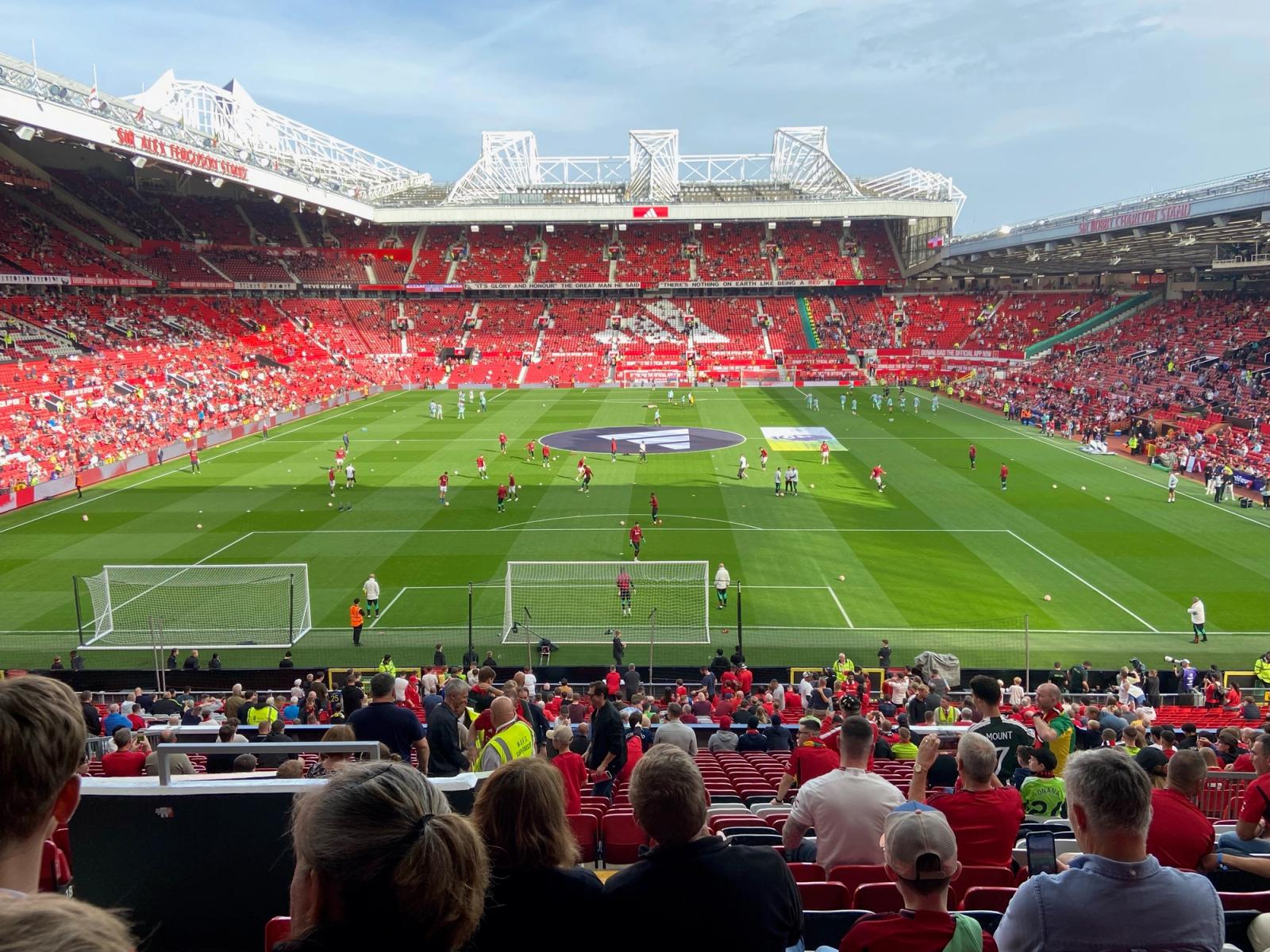
Inside Old Trafford, the Stretford End carries the emotional pull of generations. Songs such as “Glory Glory Man United,” “Take Me Home, United Road” and “We’ll Never Die” belong to the rhythm of the place. They rise before kick-off, roll through tense spells and return with extra force when belief is needed. In an Old Trafford Manchester derby, the sound often feels like a challenge thrown across the pitch.
City answer with a culture of their own. “Blue Moon” has always carried a particular charge: part melancholy, part defiance, part reminder that Manchester City supporters had their identity long before any era of silverware changed the outside view. The old Kippax terrace at Maine Road still lives in club memory as a wall of noise, a symbol of blue Manchester at its rawest and most loyal.
At the Etihad Stadium derby, the same pride takes a different shape. The songs, gestures and glances across the away section all carry history. In the wider setting of the Premier League, this meeting draws eyes from everywhere, but its heartbeat remains local. Red Manchester and blue Manchester do not need explaining to each other. They already know what is at stake.
Manchester United vs City moments
Every rivalry needs images that refuse to fade. On 27 April 1974, Denis Law, a Manchester United legend, scored for Manchester City at Old Trafford with a backheel. His reaction was muted, almost wounded, and that silence became part of Manchester derby folklore. The myth says he relegated United, although other results meant they would still have gone down. The truth matters, but so does the picture: a former hero caught in the cruel poetry of the derby.
Then came 23 October 2011, when City won heavily at Old Trafford and turned one of football’s most famous arenas into the backdrop for a blue statement. Mario Balotelli’s “Why Always Me?” celebration became one of those scenes people remember instantly, even without the full details. It was not just a scoreline. It was a shift in how the rivalry was felt, with City no longer seen only as neighbours, but as direct rivals for status.
That is the pull of Manchester United vs Manchester City history. It is made of origin stories, terrace memories, songs, bruised pride and moments that pass from one generation to the next. When the teams walk out, the noise is not only about the present. It is every old argument starting again.