
Manchester United vs Liverpool Tickets
Manchester United vs Liverpool FC billetter

 Jan 20, 2027
Manchester United vs Liverpool tickets carry the weight of more than one game. This is England’s great city-versus-city football rivalry: red against red, noise against noise, memory against memory. Form rises and falls, eras come and go, but the edge remains because the fixture is built on old civic pride, family loyalties, songs passed down, and decades of football mythology. When these two meet, the ground feels loaded before the first whistle.
Why Manchester United and Liverpool clash
The Manchester United and Liverpool FC story began before football had fully shaped it. Liverpool grew rich as a global port, looking out to the sea. Manchester became an industrial powerhouse, built on cotton, mills, production, and restless ambition. One moved goods across oceans; the other made them in huge quantities.
The Manchester Ship Canal, opened in 1894, sharpened that divide. Liverpool controlled the sea route; Manchester built its own. Merchants could bypass Liverpool’s docks and charges, and the rivalry between the two places became more than geography. It became identity.
Football added its own spark in the same year. In 1894, Liverpool beat Newton Heath, later Manchester United, 2–0 in a Football League test match at Ewood Park. It was not a gentle beginning. Promotion and relegation were at stake, and the result helped set a hard competitive tone that still clings to the United vs Liverpool fixture.
This is why the biggest rivalries in English football are not all built the same way. Everton and Manchester City are the neighbours, but this meeting is something wider: two football identities arguing, again and again, over who best represents English greatness.
When Liverpool meets United at full voice
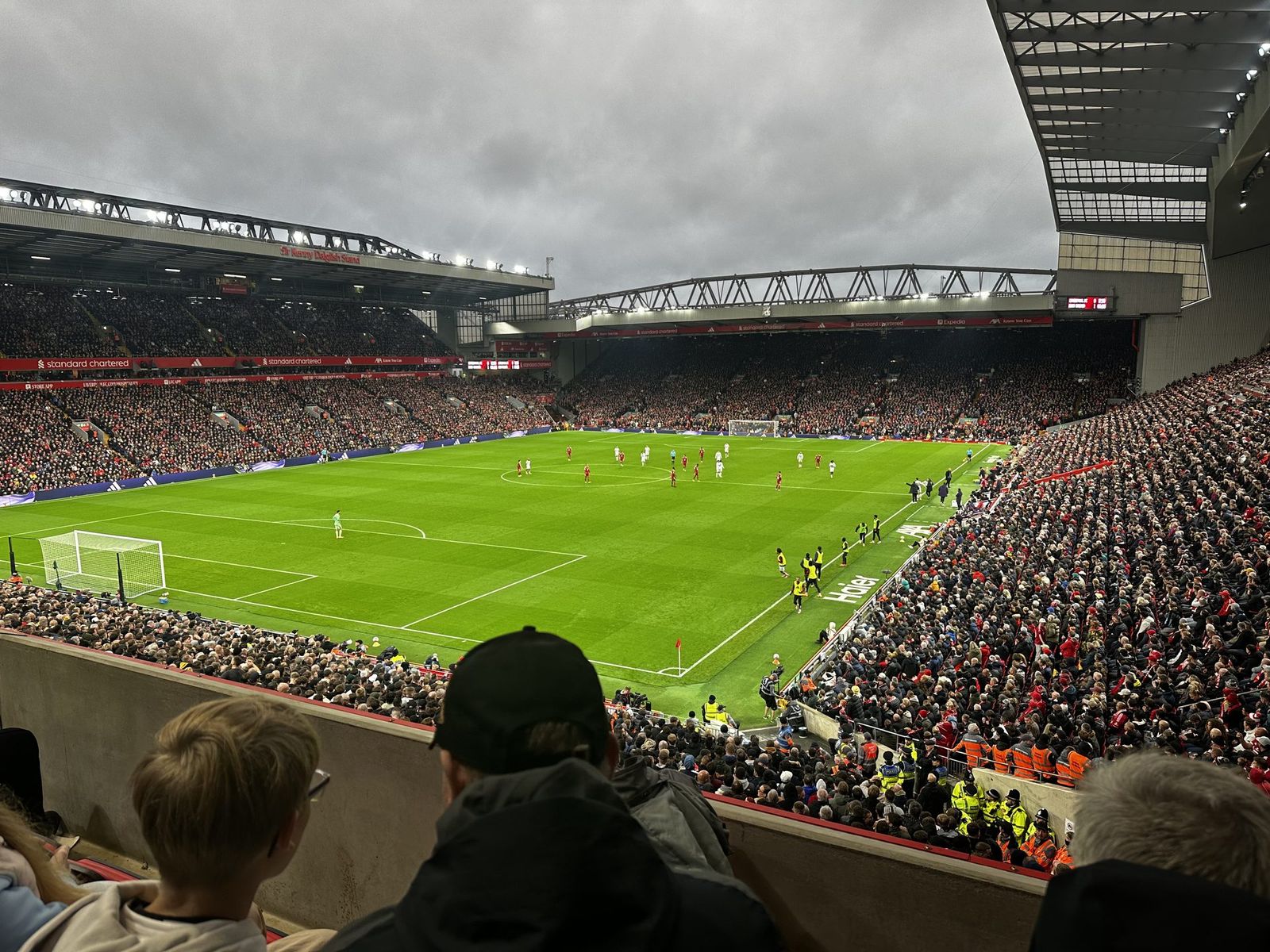
At Anfield, the build-up has its own pulse. “You’ll Never Walk Alone” gives Liverpool’s home meetings with United a deep emotional charge. The Gerry and the Pacemakers version was released in 1963, and supporters kept singing it until it became part of the club’s soul. When the scarf wall rises and the song rolls around the ground, the occasion feels bigger than a normal league evening.
At Old Trafford, the Stretford End carries United’s terrace memory: chant culture, old standing-era stories, late pressure, and that stubborn belief that a game can still twist in the final minutes. The Premier League calendar may be packed with grand occasions, but Liverpool vs Manchester United has a different temperature. It is sharper, heavier, and full of inherited emotion.
The rivalry is at its strongest when it is expressed through colour, songs, wit, and football identity. The best version of the day is loud, tense, and respectful: two sets of supporters bringing their whole history into the noise without crossing the line.
United and Liverpool moments that endure
The Manchester United-Liverpool rivalry is full of scenes that refuse to fade. The 1977 FA Cup final at Wembley remains one of them. United beat Liverpool 2–1, with Stuart Pearson scoring, Jimmy Case equalising, and Jimmy Greenhoff finding the winner. The meaning stretched beyond the cup itself: United had stopped Liverpool’s treble chase.
Then there was the 3–3 draw at Anfield in 1994. United led by three, but Nigel Clough scored twice before half-time and Neil Ruddock headed in a late equaliser. It captured the strange electricity of this fixture perfectly. No lead feels completely safe when the noise starts to turn.
Old Trafford has its own late-drama chapter from the 1999 FA Cup. Liverpool led through Michael Owen, before Dwight Yorke equalised in the 88th minute and Ole Gunnar Solskjaer scored in stoppage time. It became part of United’s Treble-season folklore and one of those endings that still seems to echo long after the final whistle.
That is why this meeting belongs among the great Clash of the Titans fixtures, and why its cup stories sit naturally beside football’s double and treble-winning legends. The names change. The shirts stay red. The anticipation stays heavy. And when the teams walk out, history walks with them.