
Liverpool vs Manchester United Tickets
Liverpool FC vs Manchester United billetter

 22-11-2026 16:30
Liverpool vs Manchester United tickets open the door to one of English football’s most charged rituals. This is not just a game between two famous clubs. It is north-west pride, family memory, old wounds, songs, defiance and identity packed into 90 minutes. Whether the setting is Anfield or Old Trafford, the air feels different when these shirts face each other.
Why Liverpool and United clash
The Liverpool Manchester United rivalry reaches far beyond the pitch. The two places sit just over 30 miles apart, but they grew with very different characters. Liverpool became a global port, open to the world through its docks. Manchester rose inland, powered by cotton, mills and manufacturing. For generations, trade linked them and divided them at the same time.
Manchester merchants depended on Liverpool’s docks for imports and exports, and resentment grew over charges and control. When the Manchester Ship Canal opened in 1894, ocean-going vessels could reach Manchester directly, bypassing Liverpool. That waterway sharpened a civic edge that football would later make louder, rawer and more visible.
The sporting story added its own twist. Liverpool faced Newton Heath before that club became Manchester United, and early meetings helped stitch football status into the wider north-west England rivalry. Religion is sometimes mentioned, but it is not the main driver. This contest is rooted in place, economy, ambition and local pride.
That is why Liverpool FC against United belongs among the great fixtures of the Premier League and the wider world of football derbies, even though it is not a local derby in the strictest sense. It carries the feeling of one.
When Liverpool and United boil over
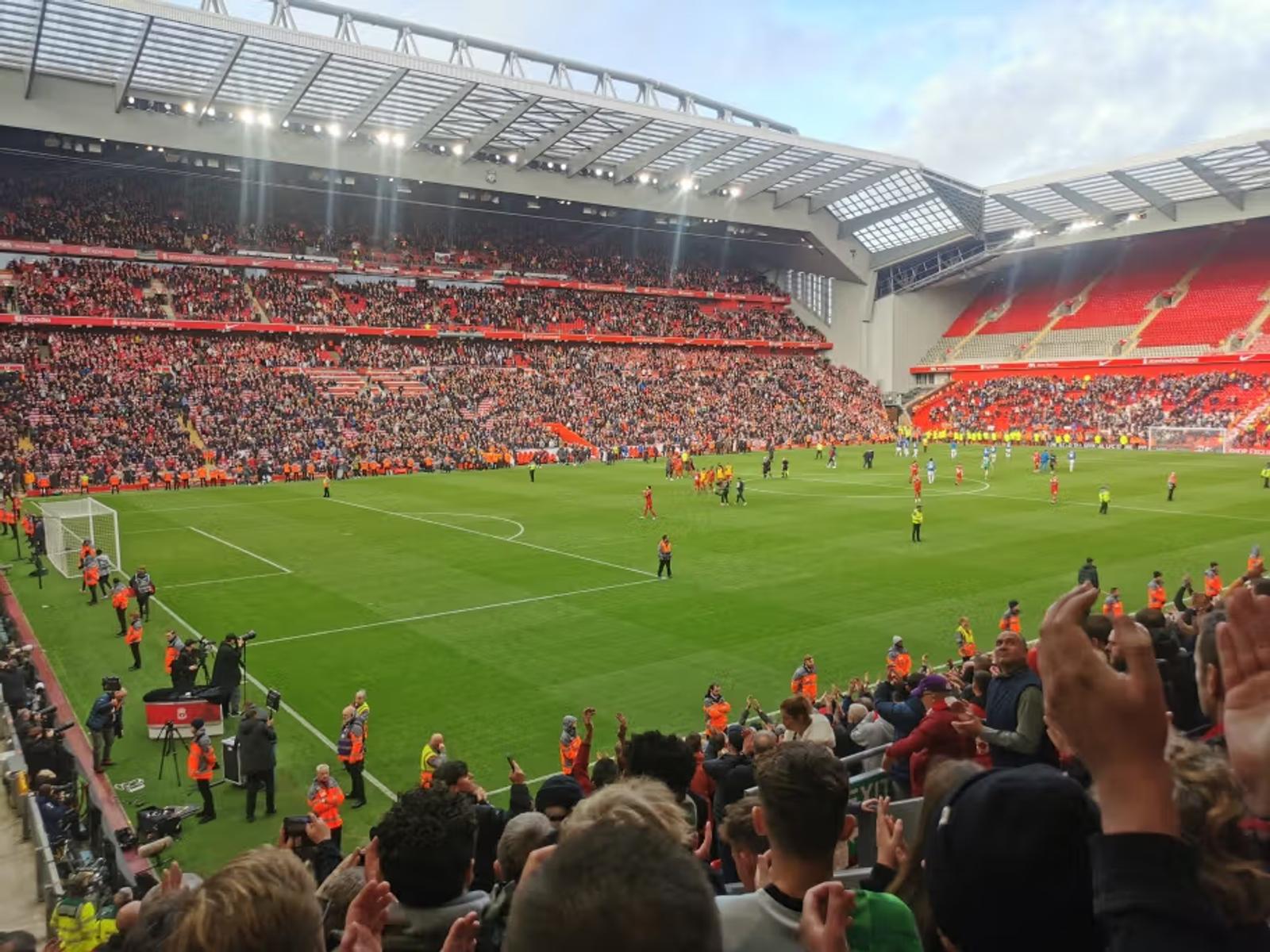
At Anfield Liverpool vs Manchester United has a particular electricity. The Spion Kop is the emotional centre of Liverpool support, a wall of collective singing and identity. “You’ll Never Walk Alone” became established there in the early 1960s, after the Gerry and the Pacemakers version entered the charts in 1963, and it remains one of the most recognisable rituals in the game.
At Old Trafford Liverpool vs Manchester United carries a different but equally powerful sound. The Stretford End has long been the heart of United’s support, shaped by young fans, flags, banners and songs from the 1950s and 1960s onward. “This Is The One,” “Country Roads” and “Glory Glory Man United” can give the ground a voice that is unmistakably its own.
This is the Kop vs Stretford End in spirit: red against red, noise against noise, memory against memory. The edge is fierce and partisan, but there is a line that should never be crossed. Abuse connected to Munich, Heysel or Hillsborough has no place in this fixture, or in football at all.
Liverpool and United defining moments
Liverpool vs Manchester United history is full of games that still live in the voices of supporters. The 1977 FA Cup Final at Wembley is one of the clearest examples. United beat Liverpool through goals from Stuart Pearson and Jimmy Greenhoff, while Jimmy Case scored for Liverpool. The result denied Liverpool an unprecedented treble, giving United a moment of direct, lasting revenge on the biggest domestic stage.
Then came the 1999 FA Cup comeback at Old Trafford. Liverpool led early through Michael Owen, but United refused to fade. Dwight Yorke equalised late, and Ole Gunnar Solskjaer struck the winner. For United supporters it became part of comeback folklore. For Liverpool, it remains one of those collapses that still stings when the fixture returns.
In 2009 at Old Trafford, the feeling swung the other way. Liverpool came from behind and won away from home, with Fernando Torres, Steven Gerrard, Fabio Aurelio and Andrea Dossena all tied to one of the club’s most cherished modern victories at their rival’s ground.
These legendary Liverpool United matches explain why clashes of the titans feel different when these two appear on the same bill. The game carries history before kick-off, finds new meaning as it unfolds, and leaves behind stories that are retold for decades.