
Liverpool vs Manchester City Tickets
Liverpool against Manchester City is not an old local derby in the traditional sense, but it has grown into one of English football’s sharpest modern power struggles. Red intensity, anthem-led and emotional, meets sky-blue control and self-belief. Fans searching for Liverpool vs Manchester City tickets are choosing a fixture where one deflection, one roar, one clearance on the line can become part of permanent folklore. We’ve guided more than 50,000 travelers through football trips like this, and ticket guarantee is always part of the package.
Why Liverpool and Manchester City clash
The Liverpool vs Manchester City rivalry is different from the older local feuds in the North West. It does not carry the same family-neighbourhood roots as Liverpool–Everton, Manchester City–Manchester United, or Liverpool–Manchester United. Its football edge grew when two elite clubs repeatedly stood in the way of each other’s biggest ambitions, turning league races and European nights into something tighter, louder and more personal.
Yet beneath the modern drama lies a much older civic tension. This is port against industry: the Mersey docks, maritime trade and warehouses on one side; cotton mills, manufacturing pride and the old “Cottonopolis” identity on the other. The Manchester Ship Canal, opened in 1894, remains a powerful symbol of that competition, allowing Manchester to bypass Liverpool’s docks and connect directly with oceangoing vessels.
That history adds another layer whenever Liverpool FC meet Manchester City. It is not only about ninety minutes. It is about North West pride, old economic rivalry and the modern pressure of two clubs used to measuring themselves against the very best in the Premier League.
When Liverpool and City boil over
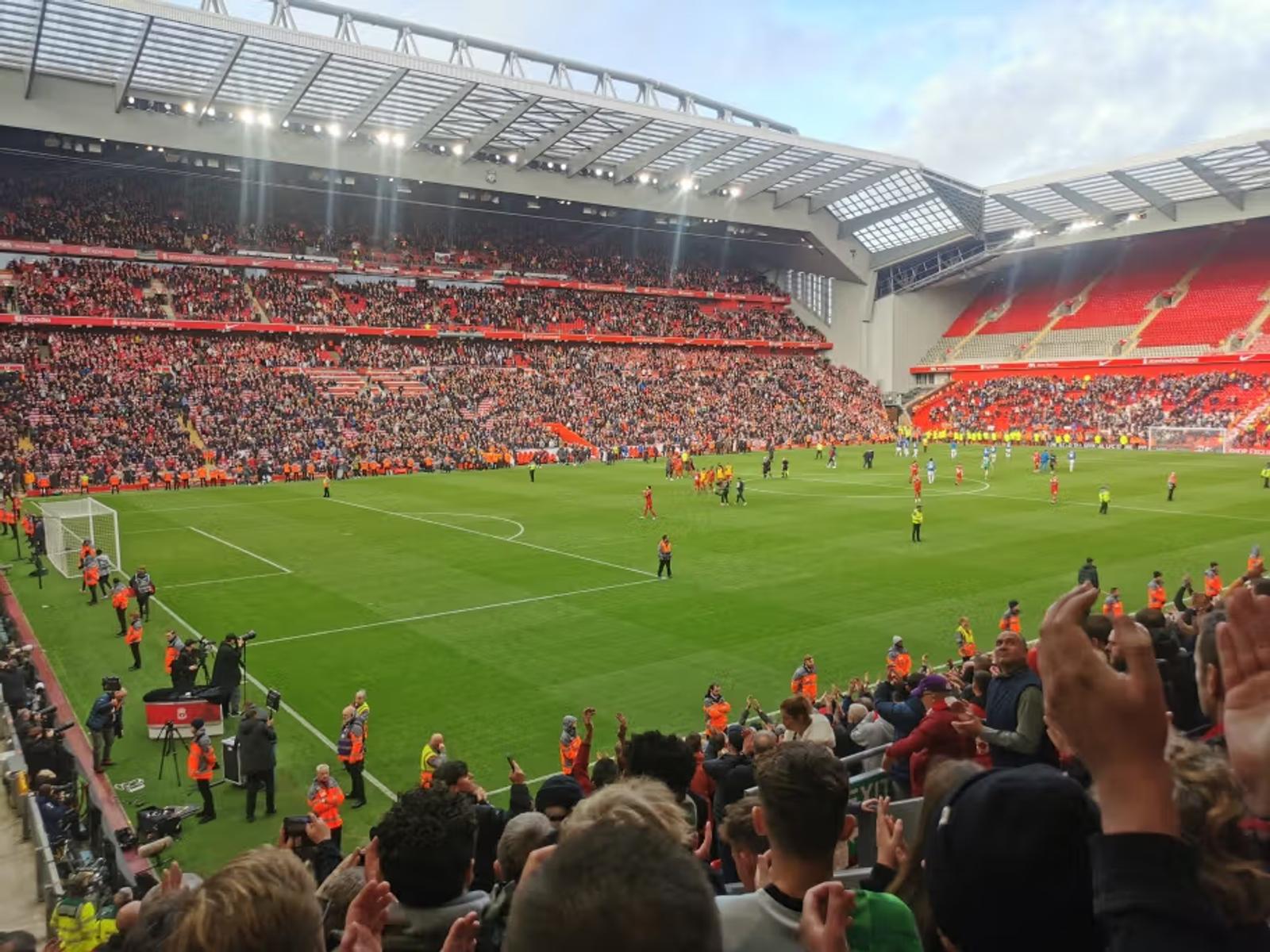
At Anfield, the occasion begins before the first serious challenge. “You’ll Never Walk Alone” is central to the emotional weight of the place, forever linked with Liverpool after Gerry and the Pacemakers took the song to No. 1 in 1963. Red scarves rise, flags ripple, and the “This Is Anfield” mythology gives the fixture a sense of ceremony before the game has even found its rhythm.
At the Etihad, City answer with their own voice. “Blue Moon” has become part of the club’s identity, with one famous origin story linking it to supporters singing the song at Anfield during the 1989–90 season. Older humour and resilience still echo through chants such as “We’re Not Really Here,” a reminder that this support carries memories from long before the era of major success.
That contrast is what makes the live feeling so gripping: Liverpool pressure and emotion crashing against City composure and precision. Every pass feels judged. Every loose touch draws breath. In this fixture, silence can be as tense as noise, because everyone senses how quickly a calm passage can turn into chaos.
Liverpool and Manchester City folklore
Some fixtures are remembered through scores. This one is remembered through scenes. April 2018 at Anfield remains one of the defining images of the modern rivalry: a major European night where Liverpool’s speed, noise and pressure overwhelmed City and became part of the story itself. The ground felt less like a venue and more like a force, a place where control could be disrupted by sheer intensity.
Then came January 2019 at the Etihad, when the whole rivalry seemed to shrink to the width of a blade of grass. In a frantic goal-line scramble, John Stones cleared the ball before it crossed completely. Technology later showed the margin: 1.12 centimetres. That number still captures the essence of the meeting better than any slogan. Nerve. Pressure. Precision. Debate that refuses to fade.
That is why Liverpool Manchester City history feels so alive. The legendary matches are not only about great teams sharing a pitch; they are about tiny margins becoming stories told for years. For anyone drawn to Anfield European night drama or the Etihad Liverpool City 1.12 centimetres moment, this remains one of the defining modern fixtures in English football.