Dortmund vs Schalke Tickets
Dortmund vs FC Schalke 04 billetter

 Apr 10, 2027
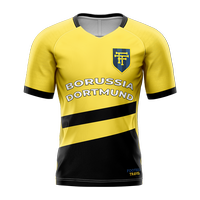
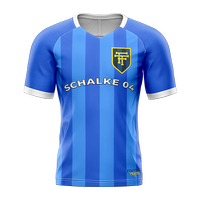
Black and yellow against royal blue. Smoke in the air, scarves lifted, throats already raw before the first whistle. Dortmund vs Schalke tickets are not simply a way into a game; they are entry into a century-old Ruhr conflict between neighbours less than 20 miles apart. The Revierderby is built on noise, colour, local pride and an old industrial identity that still clings to every song.
Why Dortmund and Schalke clash
The Borussia Dortmund and FC Schalke rivalry is often described through hatred, but its roots run deeper than that. This is a rivalry founded less on difference than on resemblance. Two Ruhr communities, shaped by work, loyalty and stubborn pride, asking the same question for generations: who truly represents the Revier?
The first competitive meeting came on 3 May 1925, when Schalke beat Dortmund 4–2. In those early decades, royal blue ruled the region. Schalke’s famous Schalker Kreisel, a short-passing style linked to the Ernst Kuzorra era, gave the club a glow that felt almost untouchable. For Dortmund, overcoming that aura became part of the club’s identity.
A symbolic shift arrived in the 1946/47 Westfalenliga final. Dortmund won 3–2 and broke something more than a scoreline. Schalke were no longer the unquestioned power of the Ruhr. From there, the Dortmund Schalke rivalry hardened into one of the defining fixtures in European derby culture: not a clash of opposites, but a fight between neighbours who recognise too much of themselves in each other.
When the Ruhr derby boils over
At Signal Iduna Park, the Südtribüne becomes the emotional centre of Dortmund’s derby identity. The Yellow Wall, with 24,454 standing spectators on Bundesliga days, does not just watch this fixture. It breathes over it. When “You’ll Never Walk Alone” rolls around the ground, it carries extra weight: a community anthem sung directly into the face of the closest rival.
At Veltins-Arena, Schalke answer from the Nordkurve. With 16,309 domestic standing places, it is the pulse of royal-blue resistance. Schalke’s nickname, Die Knappen, means “the miners,” and the Steigerlied ties the club to Ruhr coal culture in a way that feels earthy, proud and unmistakable.
Even the language has its own edge. Dortmund supporters call Schalke “Herne-West.” Schalke fans reply with “Lüdenscheid-Nord” for Dortmund. In the Revierderby, even naming the opponent becomes part of the conflict.
Dortmund vs Schalke moments that endure
The stories around Borussia Dortmund vs Schalke live far beyond any league table. On 6 September 1969, the “dog bite derby” at Dortmund’s old Rote Erde stadium turned into folklore. After Schalke scored, fans spilled onto the pitch and police dogs were brought in to restore order. Schalke players Gerd Neuser and Friedel Rausch were bitten; Rausch had a tetanus shot and kept playing. The game finished 1–1. In the return-fixture legend, Schalke brought lions from a local zoo as a theatrical reply.
Then came 12 May 2007 at Signal Iduna Park. Schalke were chasing a long-awaited Bundesliga-era title, but Dortmund won 2–0 through Alexander Frei and Ebi Smolarek. For black and yellow, it became one of the sweetest derby memories. For royal blue, one of the most painful afternoons. That is the cruelty of this fixture: sometimes stopping the neighbour matters almost as much as winning for yourself.
And on 25 November 2017 came the “Derby of the Century.” Dortmund led 4–0 after 25 minutes. Schalke somehow dragged themselves back, with Naldo equalising in stoppage time for 4–4. In one evening, humiliation turned into euphoria. That is why the Revierderby belongs among the essential fixtures of the Bundesliga story, even when football’s landscape shifts between divisions such as the 2. Bundesliga.
This is old industry, shared identity and local pride compressed into 90 minutes. Black and yellow. Royal blue. The Ruhr holding its breath.