
Chelsea vs Tottenham Tickets



 24-10-2026 17:30


Chelsea vs Tottenham tickets open the door to one of English football’s most emotionally charged fixtures. This is west London blue against north London white, Stamford Bridge hostility against Tottenham defiance, and a rivalry shaped by old wounds as much as by noise on the day. It is not simply a local derby. It carries relegation scars, Wembley memories, cultural contrast and modern flashpoints that still echo whenever these two clubs meet. We’ve taken over 50,000 travelers to games like this, and we always include our ticket guarantee.
Why Chelsea and Tottenham clash
The edge between Chelsea and Tottenham Hotspur is not based on being neighbours in the traditional sense. The distance across the capital matters less than identity. Chelsea carries the image of Stamford Bridge, the King’s Road, visibility, glamour and a certain swagger. Tottenham carries N17, the memory of White Hart Lane, community roots and a supporter culture built on defiance.
One of the earliest scars came on 30 April 1910. Tottenham beat Chelsea on the final day of the First Division season, a result that helped send Chelsea down. That kind of hurt does not disappear. It becomes part of the language of a rivalry, passed through generations, resurfacing whenever the shirts face each other again.
The Chelsea vs Tottenham rivalry also has darker strands that should never be romanticised. Tottenham’s Jewish supporter association has shaped parts of the fixture’s history, and some anti-Spurs abuse has crossed into antisemitism. That is unacceptable. Homophobic abuse connected to the game has also been condemned by clubs and authorities. Fierce noise belongs in football; discrimination does not.
When Chelsea host Tottenham
At Stamford Bridge, this fixture feels sharper than a routine Premier League evening. Chelsea’s walk-on music, “The Liquidator,” is closely linked with the chant “We hate Tottenham,” and anti-Spurs feeling runs deep in the home culture. The Shed End and Matthew Harding areas usually give the occasion its loudest pulse, with every tackle, corner and loose touch feeding the tension.
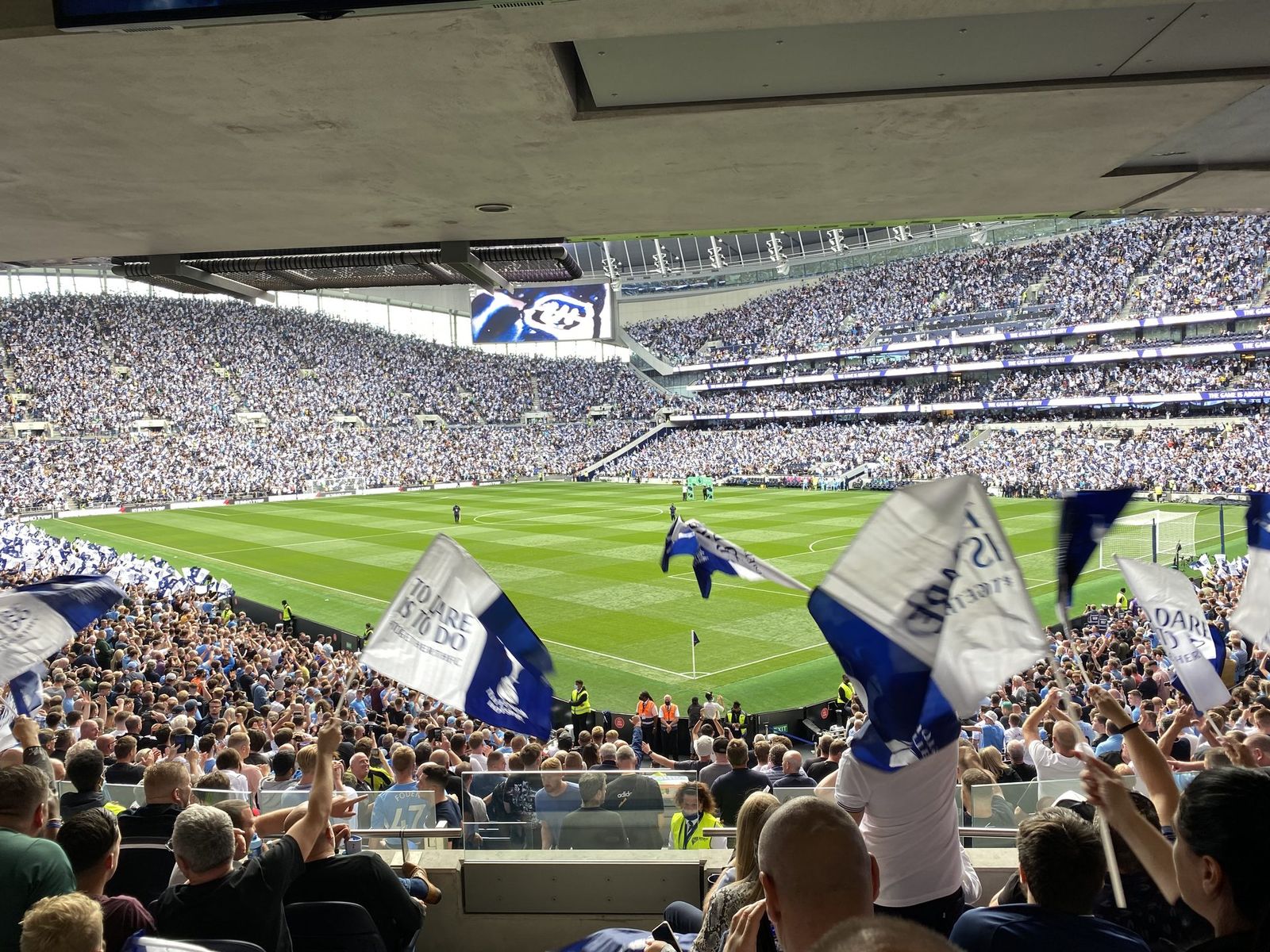
The same edge travels north. The Tottenham Hotspur Stadium was designed to keep and amplify the old White Hart Lane feel, with a vast single-tier South Stand holding around 17,500 home supporters. When Chelsea arrive in N17, the sense of resentment is immediate. It is not polite, and it is not neutral. It is one of those Premier League London derby occasions where the first roar tells you exactly what the fixture means.
The songs add colour to the rivalry. Chelsea voices lean into “Carefree” and “Blue is the Colour.” Tottenham answer with “Glory Glory Tottenham Hotspur” and “Come On You Spurs.” The best version of the Chelsea Tottenham derby is raw, loud and emotional, but still within the boundaries that keep the game open to everyone.
Defining moments that still sting
- At Wembley on 20 May 1967, Tottenham beat Chelsea 2–1 in the first all-London FA Cup final, remembered as the “Cockney Cup Final.” Jimmy Robertson and Frank Saul scored for Spurs, Bobby Tambling replied for Chelsea, and the presence of former Chelsea figures Jimmy Greaves and Terry Venables in Tottenham colours added an extra twist.
- In the 1974–75 season, Tottenham defeated Chelsea 2–0 at White Hart Lane through Alfie Conn and Steve Perryman. Both sides were fighting relegation, but Chelsea eventually went down while Tottenham survived on the final day. For Chelsea supporters, it became another painful chapter.
- The “Battle of the Bridge” on 2 May 2016 gave the modern rivalry one of its wildest nights. Tottenham led 2–0 before Chelsea came back to draw 2–2 through Gary Cahill and Eden Hazard, confirming Leicester City as champions. Nine Tottenham yellow cards, confrontations and tunnel flashpoints turned the game into folklore.
That is why this fixture feels different. The London football map is full of rivalries, but few carry this particular mix of old humiliation, cultural friction and modern fury. In the wider Premier League story, Chelsea against Tottenham remains a meeting where history is never just history. It is in the songs, the whistles, the sudden silence before a free kick, and the explosion when the ball hits the net.