
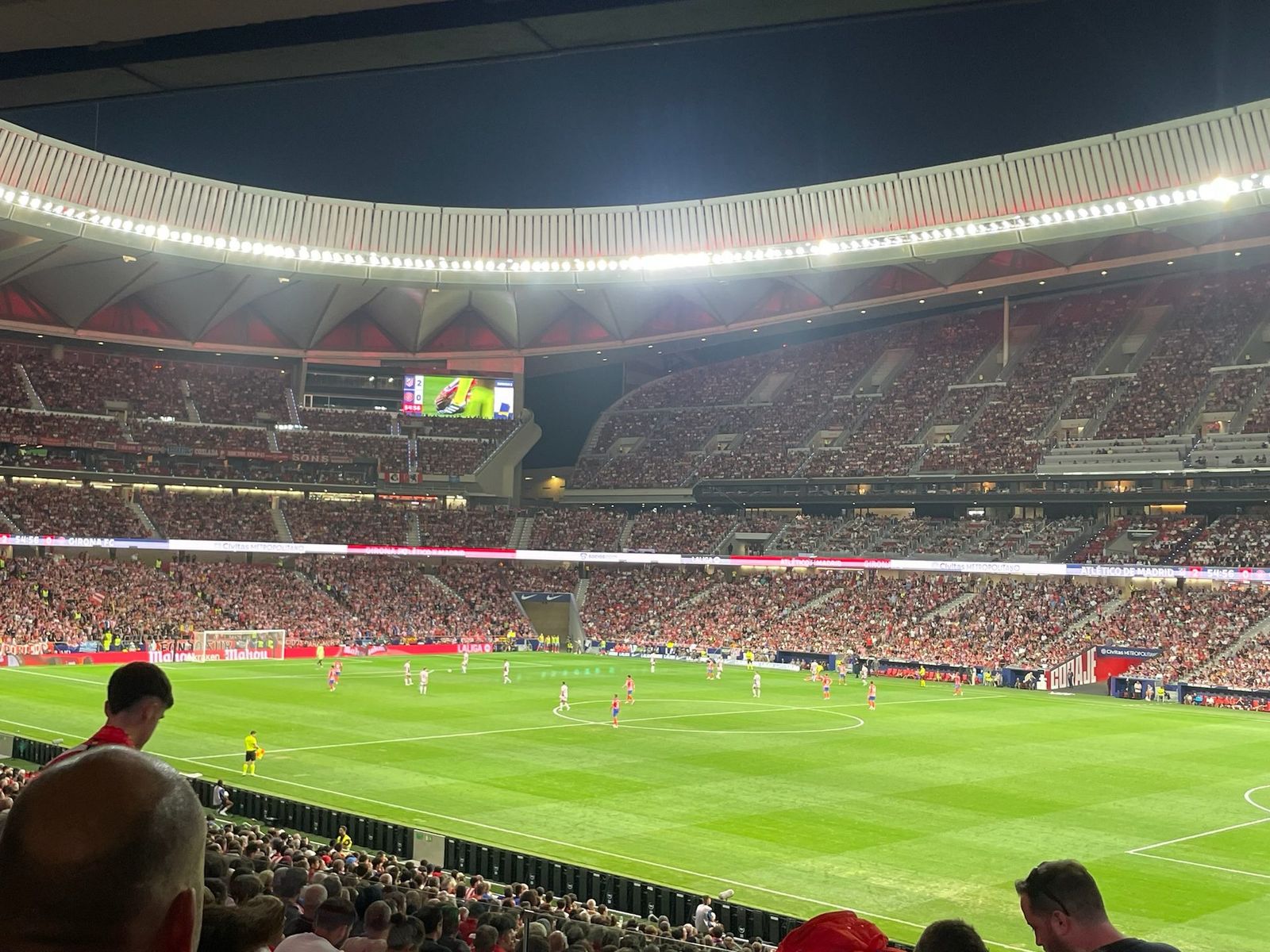
Bayern Munich vs Dortmund Tickets
Bayern München vs Dortmund billetter

 31-10-2026 18:30
This is not a neighbourhood derby with streets, districts and family borders drawn through the middle. Bayern Munich against Borussia Dortmund is something bigger and colder in its logic: a national power struggle. It is Germany’s established force against its most persistent challenger, authority against defiance, control against collective pride. Bayern carry the weight of expectation, the Bavarian certainty of “Mia san mia” and the demand to win. Dortmund arrive with Ruhr identity, togetherness and emotional resistance. That is why anyone looking for Bayern Munich vs Dortmund tickets is looking at one of German football’s defining occasions.
Why Bayern Munich and Dortmund collide
The Bayern Munich vs Dortmund rivalry was never built on shared streets or old civic divides. There is no common neighbourhood, no local border, no ancient religious split. Its edge comes from repeated clashes for the soul of German football. In the mid-1990s, Borussia Dortmund became the club that refused to accept Bayern’s usual command of the domestic game.
Dortmund’s back-to-back Bundesliga titles in 1994/95 and 1995/96 changed the tone. They did not just win; they interrupted the expected order. In a competition often shaped by Bayern’s authority, BVB forced the country to look west to the Ruhr, where noise, labour and unity created a different kind of power. For Bayern Munich, Dortmund became more than another opponent. They became the side that kept asking uncomfortable questions.
The symbolism deepened in 1997, when Dortmund won the Champions League in the Olympiastadion, Bayern’s home ground at the time. For BVB, lifting Europe’s biggest club prize on that stage became a mythic triumph. For Bayern, it carried the sting of a challenger celebrating in their own arena. From then on, the Bayern Munich Dortmund fixture carried a tension that felt bigger than the league table.
When Dortmund faces Bayern Munich live
At Signal Iduna Park, this game feels like a collective act of resistance. The Südtribüne, known across the world as the Yellow Wall, holds around 25,000 supporters and becomes the emotional centre of the evening. Songs such as “You’ll Never Walk Alone” and “Leuchte auf, mein Stern Borussia” feel heavier when Bayern visit. They are not just sung; they rise like a challenge.
At the Allianz Arena, the mood is different. The red and white pressure is precise, confident and demanding. The Südkurve gives Bayern its vocal force, but the wider feeling is shaped by expectation: order should be restored, the challenger should be beaten, control should return. That contrast is what makes Bayern Munich vs Borussia Dortmund tickets so sought after by supporters who want more than a regular league game. We have seen this first-hand with over 50,000 travelers, and every football trip brings the same intensity. Every booking includes our ticket guarantee, so you can focus on the day itself.
The emotional meaning is simple. A Dortmund win proves that Bayern can be challenged. A Bayern win confirms the hierarchy. Every defeat feels larger than three points, because the result speaks to identity as much as performance. That is why Borussia Dortmund vs Bayern Munich remains one of the great fixtures in the Bundesliga.
Bayern Munich vs Dortmund: defining moments
Some images never leave a rivalry. In 1999, Oliver Kahn’s wild afternoon in Dortmund became one of its most infamous chapters. The apparent bite or nibble on Heiko Herrlich, followed by the kung-fu-style challenge toward Stéphane Chapuisat, captured everything supporters projected onto this clash. For Dortmund fans, it symbolised Bayern aggression and arrogance. For Bayern followers, it showed uncompromising will.
Then came the 2012 DFB-Pokal final in Berlin. Dortmund beat Bayern 5–2, Robert Lewandowski scored a hat-trick, and BVB completed the club’s first domestic double. It was a modern high point for Dortmund and a painful public defeat for Bayern, the kind of result that lives on because it felt like a statement rather than a single cup final.
One year later, the rivalry reached the global stage. The 2013 Champions League final at Wembley was the first all-German final in the competition. Bayern won 2–1 with a late decisive goal. For them, it was redemption. For Dortmund, heartbreak after coming so close to European glory. Since then, Der Klassiker tickets have carried that extra weight: the memory of domestic battles, European drama and two identities that still refuse to leave each other alone.