
Barcelona vs Real Madrid Tickets
FC Barcelona vs Real Madrid billetter


 25-10-2026 21:00
Barcelona vs Real Madrid tickets open the door to more than ninety minutes of football. El Clásico is identity under floodlights: white shirts against blaugrana colours, whistles rolling from one end to the other, songs rising with old memories attached. It is pressure, pride, and history made public, a meeting where FC Barcelona and Real Madrid carry far more than the names on their crests.
Why Barcelona and Real Madrid clash
The story begins early, in the 1902 Copa de la Coronación, before Spanish football had fully found its shape. From there, the tension grew through disputed signings, fierce decisions, bruised pride and the rise of two institutions that came to represent different centres of power and belonging.
The Barcelona vs Real Madrid rivalry is not simple hatred. It is layered with geography, language and memory. Barça’s identity is tied to Catalonia, to its culture and to the phrase “Més que un club”, first used by president Narcís de Carreras in 1968. Under Franco, Catalan identity was suppressed, and the killing of Barça president Josep Suñol by Franco’s troops in 1936 remains part of the club’s institutional memory.
Real Madrid, meanwhile, carries the symbolism of the capital: prestige, national visibility and a sense of authority. For many Barcelona supporters, that has often made Madrid feel like more than an opponent. It becomes a symbol of central power. That is why La Liga feels different when these two meet. The game turns into a public argument about belonging, status and memory.
The pressure inside Camp Nou and the Bernabéu
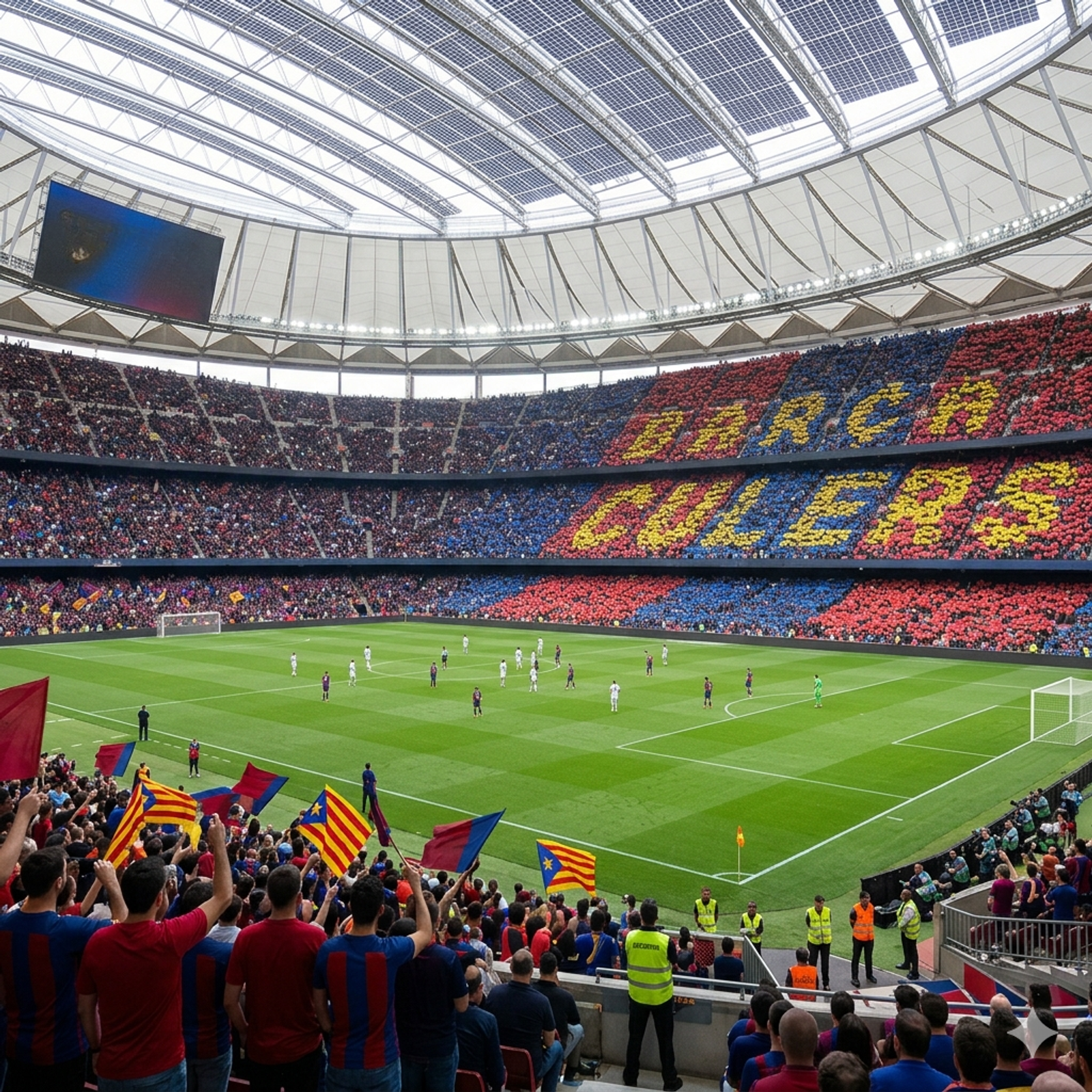
At Camp Nou, El Clásico often feels like a defence of Catalan identity. The language, the flags, the blaugrana shirts and the collective pride all press down on the pitch. The club anthem, “Cant del Barça”, was composed in 1974 and first performed at Camp Nou by 3,500 voices. On that same occasion, “Cant de la Senyera” was also heard, a song banned under Franco. That detail gives the sound of the ground a deeper charge.
At the Santiago Bernabéu, the mood is different but just as intense. The home crowd expects authority, elegance and control. It can be demanding, sharp and proud, yet it has also shown the capacity to recognise genius when something truly rare happens. Madrid songs such as “Hala Madrid” and “Hala Madrid y nada más” reinforce that feeling of capital-city confidence.
This is the great contrast of Camp Nou El Clásico and Santiago Bernabéu El Clásico: one setting can feel like Catalan assertion, the other like a theatre of expectation and dominance. Both make the air heavier before the first whistle.
Moments that still echo
Some episodes never leave El Clásico history. The 1943 Copa del Generalísimo semi-final in Madrid remains one of the darkest and most debated chapters. Barcelona had won the first leg, but the return is remembered for an extreme scoreline, allegations of intimidation and claims of political pressure. For Barça, it became a symbol of humiliation under Francoism. For Madrid, it is an uncomfortable memory rather than a celebrated victory.
Then there are moments when hostility briefly gives way to awe. On 19 November 2005, Ronaldinho produced a performance in Madrid so extraordinary that sections of the Bernabéu applauded him. It was a rare pause in the noise, proof that the Real Madrid Barcelona rivalry is also capable of recognising beauty when football rises above resentment.
Other images remain fixed in the collective mind: the pig’s head thrown during Luís Figo’s return to Camp Nou in 2002 after his move from Barcelona to Real Madrid, and Barcelona’s statement night at the Bernabéu in 2009, remembered for symbolic dominance and Carles Puyol kissing the captain’s armband.
That is why El Clásico tickets feel different from ordinary admission to a game. The fixture is built from songs, scars, applause, anger and pride. When Barcelona and Madrid meet, the past does not sit quietly in the background. It walks into the stadium with everyone else.