
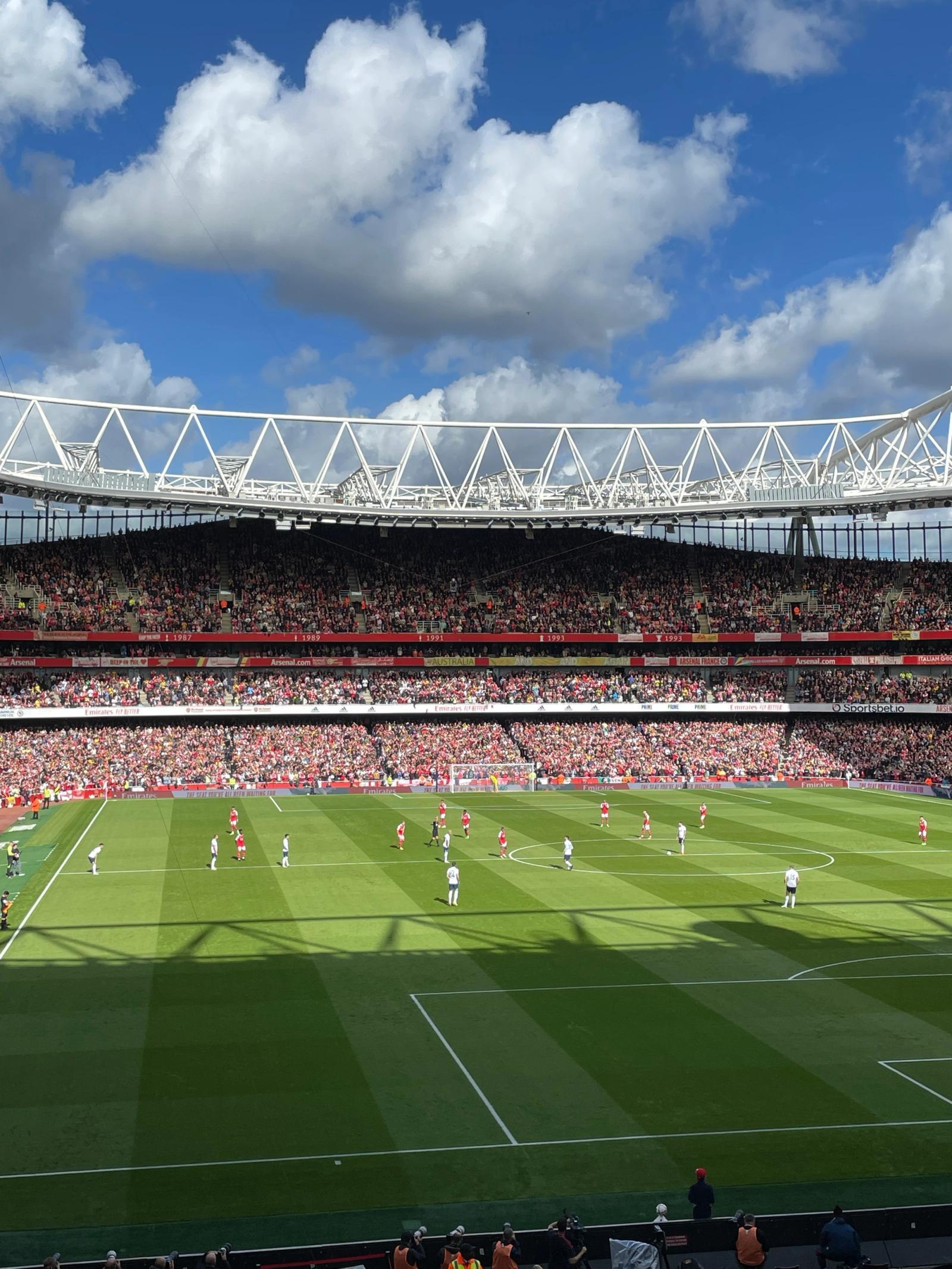
Arsenal vs Tottenham Tickets
Arsenal vs Tottenham billetter


 01-05-2027
Arsenal vs Tottenham tickets are an entry into one of English football’s great local arguments. The North London derby is not only about ninety minutes. It is about territory, identity, family loyalties, schoolyard teasing, office jokes, street corners, old memories and the right to say, for a while at least, that north London belongs to your side. Red and white do not simply share a postcode here. They challenge each other for it.
Why Arsenal and Tottenham clash
The first recorded meeting came in 1887, when Tottenham faced Royal Arsenal in a game abandoned because of darkness, with Spurs leading 2–1. That was an early spark, but the rivalry as it is known today really took shape in 1913. Arsenal left Woolwich in south-east London, moved to Highbury in Islington, and soon dropped “Woolwich” from the club name.
For the Gunners, the move was a matter of survival and ambition: bigger crowds, better connections and the chance to grow into a major London club. For Spurs, already rooted in the north, it felt like an outsider had arrived on their doorstep and started building a new identity in their own territory. That is why the story still bites. It is not built on religion or a neat class divide, but on belonging, legitimacy and local pride.
The wound deepened in 1919, when league football resumed after the First World War and Arsenal were chosen for the First Division ahead of Tottenham. More than a century later, that decision still sits in the background whenever the sides meet. The rivalry connects Arsenal, Tottenham Hotspur, Highbury, White Hart Lane, Islington and N17 in one long, restless conversation.
When north London boils over
Inside the Emirates Stadium, the red side carries the line from Highbury into the present. “North London Forever” gives the place a sense of home, not just noise. Across the divide, the Tottenham Hotspur Stadium stands on the old White Hart Lane footprint, tied to N17 and generations of Spurs memory.
The chants tell you what is at stake. Arsenal supporters lean into “North London is red,” anti-Spurs songs and the glory of title celebrations on enemy ground. Tottenham supporters answer with “North London is white,” “Glory Glory Tottenham Hotspur” and “Oh When the Spurs Go Marching In.” The sound rises because nobody wants to hand the other side a story that will be repeated for years.
There is also cultural background that deserves care. Tottenham’s historic Jewish supporter identity is part of the club’s wider story, but this rivalry itself is not founded on religion. The heart of it is local bragging rights, inherited loyalties and the feeling that every derby day adds another line to the argument.
Moments that still echo
The great derbies live through moments, and this one has plenty that refuse to fade.
- On 3 May 1971 at White Hart Lane, Ray Kennedy scored late as the Gunners became champions on Tottenham’s ground. They later completed the Double, turning that night into one of the red side’s proudest boasts.
- On 14 April 1991 at Wembley, Paul Gascoigne struck a famous long-range free-kick after five minutes in an FA Cup semi-final. Gary Lineker played a central role as Spurs won and stopped their rivals’ Double chase.
- On 25 April 2004, the Arsenal Invincibles secured the Premier League title at White Hart Lane. Patrick Vieira and Robert Pires scored, Tottenham fought back through Jamie Redknapp and Robbie Keane, but the draw was enough for another red celebration in N17.
That is why the Premier League feels different when these two names sit side by side. Form changes, players come and go, but the North London derby keeps its pulse. It is history shouted from both ends, pride held tight in the chest, and a rivalry that turns one fixture into a question of who gets to claim home.