
Arsenal vs Manchester United Tickets
Arsenal vs Manchester United billetter

 19-12-2026
Arsenal vs Manchester United is not a local derby, but it has always carried the weight of one. It is London against Manchester, red against red, control against force, elegance against authority. The demand for Arsenal vs Manchester United tickets comes from decades of grudges, title races, tunnel tension and moments that still feel alive whenever these two names appear together. We’ve helped over 50,000 travelers experience football trips like this, and ticket guarantee is always part of what we offer.
A rivalry built on power, not postcode
The Arsenal and Manchester United rivalry was never shaped by neighbourhood borders, religion or one-city bragging rights. Its identity comes from something broader: the fight to define English football. When these clubs collide, it feels like a dispute over status, memory and who gets to stand tallest in the national game.
The roots go deep. Arsenal were founded in 1886 by munitions workers at the Royal Arsenal in Woolwich. Manchester United began in 1878 as Newton Heath LYR, a railway-yard team in Manchester. Both clubs rose from working-industrial beginnings into institutions with global followings, proud rituals and a sense of belonging that reaches far beyond their home grounds.
The hostility sharpened from the late 1980s and early 1990s, then truly exploded when Arsène Wenger arrived in 1996 and Arsenal became United’s most persistent challenger. The Wenger Ferguson rivalry gave the Premier League one of its defining storylines: technical control, discipline and continental ideas against the relentless power of a club used to setting the pace.
Even before that era reached boiling point, the October 1990 brawl at Old Trafford left a mark. Both clubs were punished, and the fixture gained an edge that never fully disappeared. It became one of those rare English football rivalries that does not need shared streets to feel personal.
Inside the ground, the past never stays quiet
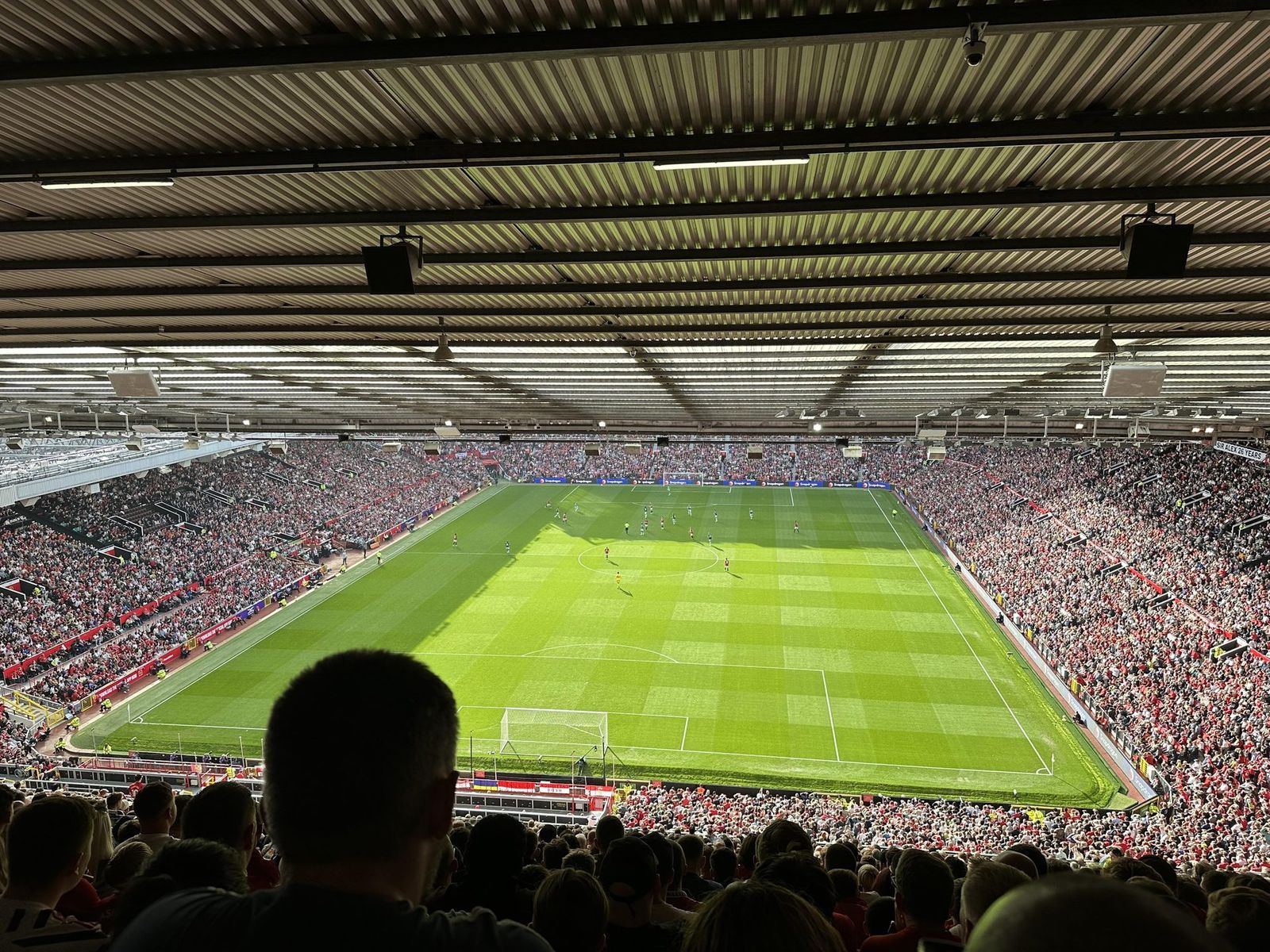
At Old Trafford, an Arsenal win has always meant more than three points. It means walking into United’s great theatre and challenging the aura built during the Ferguson years. For United supporters, this game has long been about defending pride, status and the authority that once made visiting teams feel beaten before the first whistle.
At Arsenal, the meeting still carries Highbury memories: the North Bank, the Clock End, the old rhythm of “One-Nil to the Arsenal,” and the sense that every challenge, chant and pause has something behind it. The Emirates Stadium Manchester United occasion is not just noise; it is memory pressing down on the present.
The emotional language of the Arsenal United rivalry was written by repeated flashpoints. Vieira and Keane in the tunnel. Keown and Van Nistelrooy in each other’s faces. Wenger and Ferguson trading pressure from the technical area. Disciplinary chaos, late penalties, red cards and touchline fury. It sits naturally among the great meetings collected under Clash of the Titans, because it has always felt bigger than the league table.
The matches that turned tension into theatre
Some games became part of English football folklore. The 1999 FA Cup semi-final replay at Villa Park had everything: a Manchester United red card, Dennis Bergkamp’s late penalty saved by Peter Schmeichel, and Ryan Giggs tearing through Arsenal in extra time with a solo goal that kept United’s Treble path alive. For Arsenal, it remains one of the great “what if?” nights.
- In 2002, Sylvain Wiltord scored at Old Trafford to secure Arsenal the league title on United’s own ground, a celebration loaded with symbolism.
- In 2003, the Battle of Old Trafford gave the feud another permanent scar, with Van Nistelrooy’s missed penalty and Martin Keown’s reaction becoming defining images.
- In 2004, United ended Arsenal’s unbeaten league run, and the tunnel chaos remembered as Pizzagate, or the Battle of the Buffet, added another layer to the legend.
That is why Arsenal United tickets carry a charge that goes beyond the game itself. This is not just a meeting between two famous clubs. It is a living argument, shaped by the Double and Treble era, by wounded pride, by unforgettable confrontations and by the feeling that something old wakes up every time the teams walk out.