
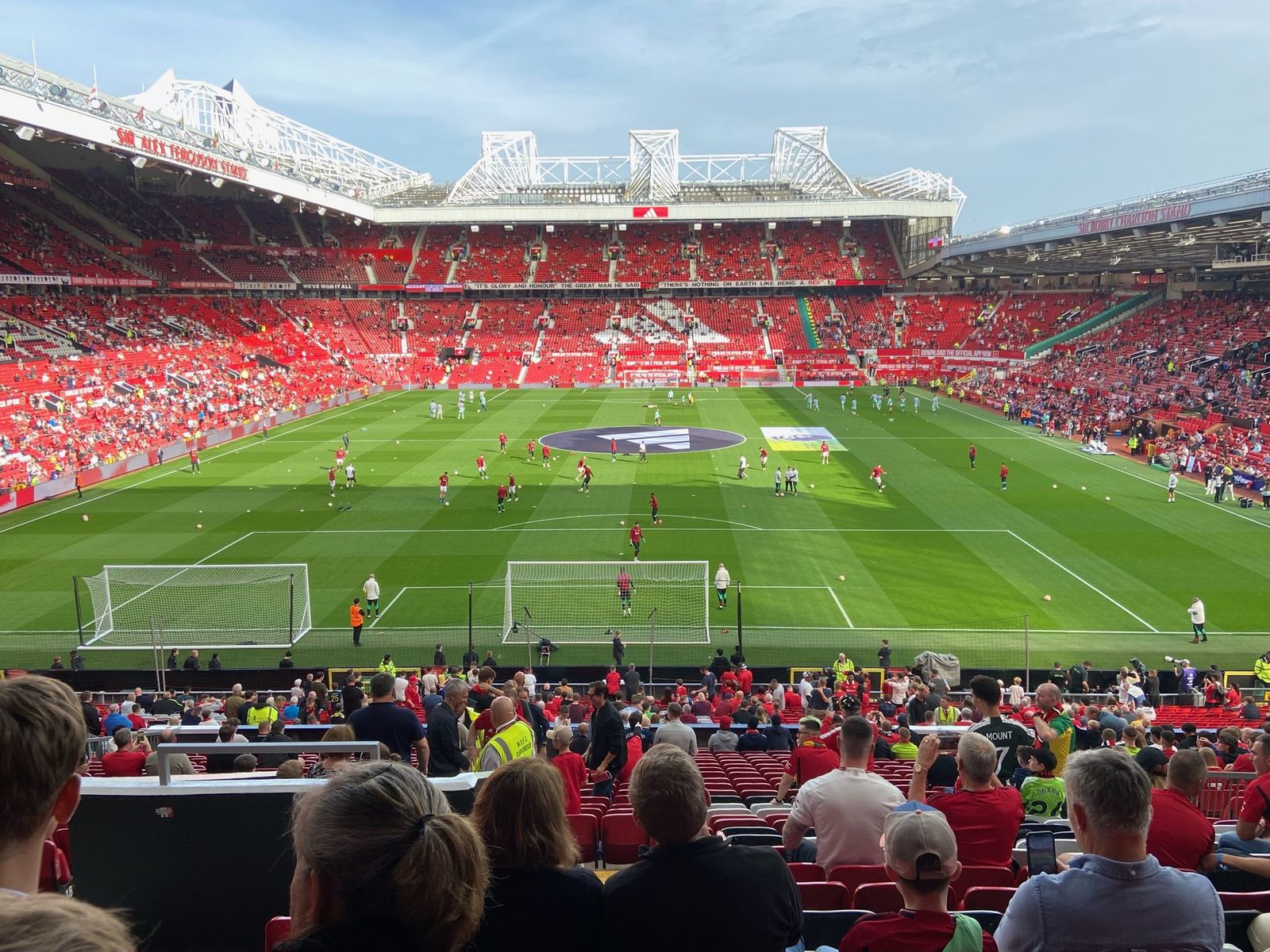
World’s Biggest Football Club: A Travel Guide
Madrid at dusk has a way of pulling you toward football without asking. The air is still warm, traffic hums along Paseo de la Castellana, and white shirts begin to drift between office blocks, cafés and glowing shop windows. Around the Bernabéu, bars fill early. Glasses clink, small plates arrive, and every few minutes another group turns the corner with that half-nervous, half-excited look before kick-off.
If you are dreaming of a football trip and wondering where to start, Real Madrid is the obvious club to measure against the idea of the world’s biggest football club. At Football Travel, we have helped more than 50,000 travelers since 2008 turn football weekends into proper city breaks, and Madrid is one of those places where the game and the city feel naturally connected. This guide will help you choose when to go, what kind of evening suits you, how the day unfolds, and how to plan a Santiago Bernabéu experience with confidence.
Why Madrid feels so big
Some clubs are famous. Real Madrid feels like it has its own gravity. You sense it in the white shirts on Gran Vía, in the museum queues near the ground, and in the way locals talk about European nights as if comebacks are part of the city’s weather. The phrase “Reyes de Europa”, Kings of Europe, is not just painted on banners. It sits deep in the identity of the club.
The numbers explain part of it. Real Madrid have won 15 European Cups and UEFA Champions League titles, including the 2023/24 triumph. Deloitte’s 2026 Football Money League placed the club as the highest-revenue side in world football, close to €1.2 billion in 2024/25, while Brand Finance 2025 listed it as the most valuable football club brand at €1.921 billion. But the feeling is bigger than a spreadsheet. On Champions League nights, the Bernabéu becomes a white football cathedral in the middle of a major capital.
Then there is Plaza de Cibeles. In 2024, after the 15th European crown, captain Nacho placed the Real Madrid flag and scarf on the goddess while thousands filled the square. That image says a lot about why many fans see this as the world’s biggest football club: silverware, ritual, and a city that knows exactly where to gather when history happens. And before or after the game, Madrid gives you museums, Retiro walks, late dinners, tapas, and the soft buzz of warm evenings. For a wider look at the league setting, La Liga in Spain adds useful context to the trip.
Pick your perfect big night
Not every Real Madrid home game feels the same, and that is good news. If it is your first visit, or you are traveling with family, a regular league evening can be the smoothest way in. You still get the scale, the lights, the anthem over the speakers, and the sea of white around the bowl, but the city is a little easier to move through.
For pure drama, aim higher. European knockout evenings bring the classic Bernabéu mood: late kick-offs, nerves in the rows, and a crowd that can turn from silence to thunder in seconds. El Clásico is different again. When FC Barcelona come to town, Madrid feels charged for the whole weekend, with the white of Los Blancos set against the blaugrana of Barça and the eyes of the world on the capital. Our Clash of the Titans trips are built around exactly these heavyweight occasions.
El Derbi Madrileño against Atlético de Madrid has a more local edge. It is workplace banter, family loyalties, and two very different football homes facing each other across the city. If you want the strongest street build-up, look toward Barcelona, Atlético, European knockouts or late-season title games. Just remember that Spanish dates can move for TV, so flexibility matters when planning any derby football trip.
Feel the Bernabéu rhythm
The best way to approach the Santiago Bernabéu is slowly. Start around Nuevos Ministerios and walk up Paseo de la Castellana. The arena appears between office towers and city traffic, first as a glimpse, then as a shining mass of steel, glass and expectation. Around Doctor Fleming, Padre Damián, Orense and Concha Espina, the pre-game scene starts to thicken: cañas on crowded terraces, small plates passed across narrow tables, scarves knotted tighter as the hour gets closer.
Near Avenida de Concha Espina and Plaza de los Sagrados Corazones, the Busiana is the moment to catch if you can. Supporters gather for the team bus with smoke, phone lights, chants and that sudden ripple when the vehicle appears. Birra Bernabéu at Avenida de Concha Espina 6 and Bar Orsay on Calle del Doctor Fleming 4 are handy nearby stops, while Bernabéu Market under Gate 54 works well for groups or travelers who want food close to the stadium footprint.
Inside, do not expect constant singing from first minute to last. Madrid football culture is more demanding, more reactive. There are whistles, applause, sharp roars and the occasional pañolada when white handkerchiefs appear in protest. Listen in the seventh minute for “Illa, illa, illa, Juanito maravilla,” the Juanito chant that rolls around the ground like a private code. It is one of those small details that turns a Real Madrid football trip into something you remember with texture. One simple rule: avoid Barcelona or Atlético colours in home areas.
Plan it without stress
Where you stay shapes the weekend. Castellana or Nuevos Ministerios keeps you close to the ground. Chamberí is excellent for bars and late-night wandering. Salamanca works well for restaurants and shopping, while Gran Vía or Sol gives you the classic sightseeing base, with plazas, theatres and old streets waiting between football plans.
For transport, Santiago Bernabéu Metro on Line 10 is the usual stop, though it is always worth checking current works. Nuevos Ministerios, Cuzco, Concha Espina and Colombia are useful alternatives, and on bigger evenings walking part of the route can be calmer than squeezing into the last crowded carriage. Arrive two to three hours early if you want to eat, feel the build-up, find the right gate and let the evening breathe.
A Bernabéu tour on a non-game day is worth adding if time allows. The museum, trophy displays, panoramic view and transformation story from 1947 to the renovated arena give the place extra depth. On the day of a fixture, the visit is only available up to 5.5 hours before kick-off, and changing rooms and dugouts are closed on the day and the day before. The 2,800 m² Megastore and Bernabéu Market can turn the area into a full afternoon.
For the biggest evenings, secure access matters most. Official access, our package trips with flight, hotel and official match ticket, and the Football Travel ticket guarantee are there to remove the uncertainty around Real Madrid tickets, especially for El Clásico, the derby and European knockouts. If you are comparing different ways to travel, our guide to budget-friendly football trips can help you think through timing, location and priorities before Madrid pulls you in under the lights.