
How Many People Fit in Old Trafford? A Fan's Guide
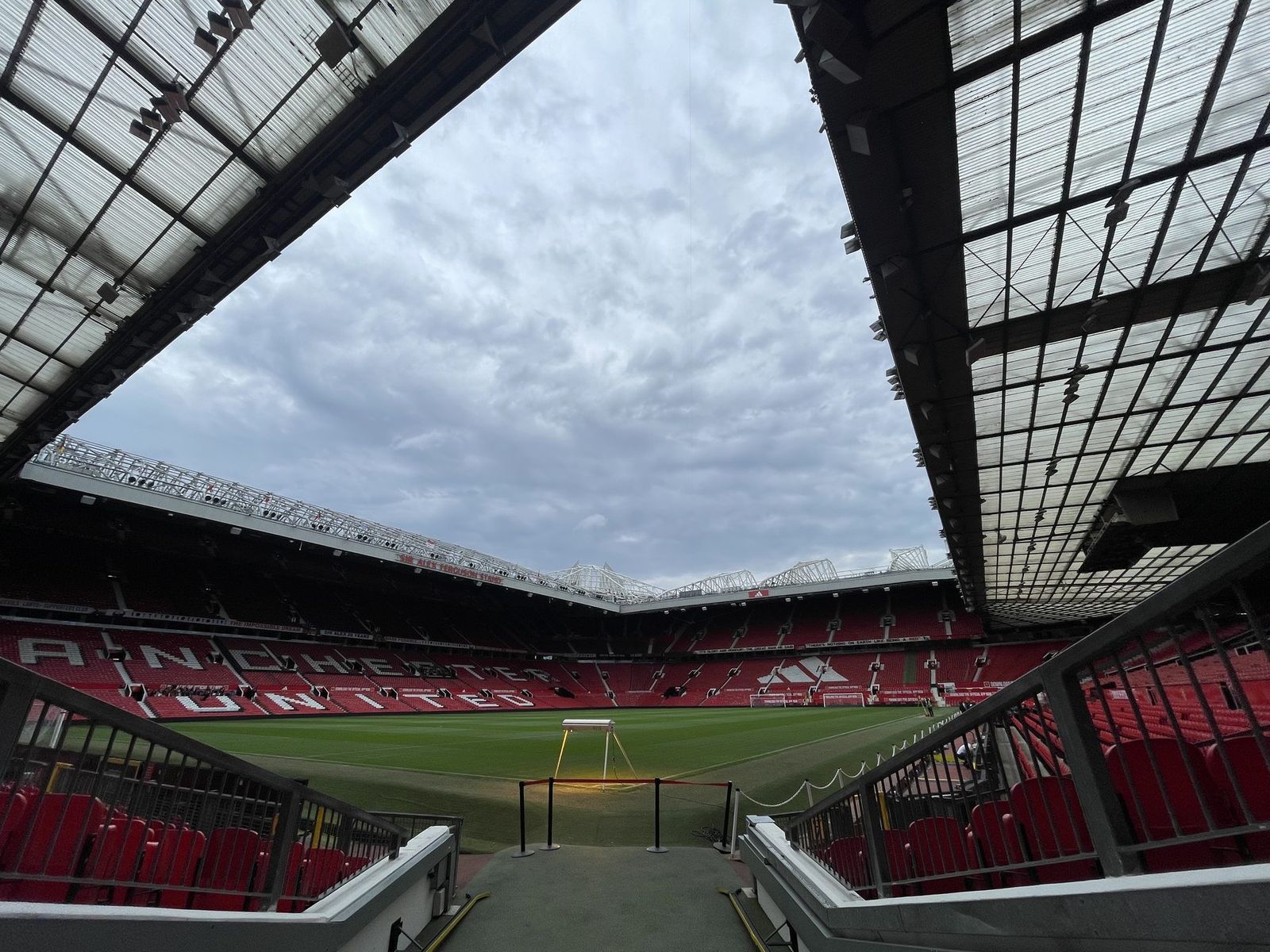
The first pull of Old Trafford starts before you see the roofline. Red shirts drift from the tram stops. Scarf sellers line Sir Matt Busby Way. Songs roll out from Chester Road, half-lost under traffic noise, then suddenly louder as the Manchester United stadium appears above the crowd. If your first question is how many people fit in Old Trafford, the simple answer is around 74,300, with the Premier League listing the figure at 74,310. In real life, that number feels like a small city moving in one direction.
That is why a football trip with Manchester United has such a strong pull for first-timers. It gives you a huge crowd, famous history, easy access from the centre, and those classic English rituals of songs, queues, chips, scarves and nervous pints before kick-off. Since 2008, we have helped more than 50,000 travelers plan football trips, and a 70,000-plus crowd always feels different when you are inside it rather than reading the number on a screen. It is a big reason Manchester remains one of the most tempting stops in the Premier League.
Feel the size of Old Trafford
Old Trafford capacity is more than a statistic. It shapes the whole day. More than 70,000 people pouring toward one ground turns a few ordinary streets into a red, noisy procession. You hear accents from every corner of the world, see families taking photos by the statues, and feel the pace slow as the turnstiles get closer.
Old Trafford holds around 74,300 fans today, making it the largest club football stadium in the UK. It has been the Manchester United home ground since 1910, and its shape tells the story of English football itself. It opened with roughly 80,000 places, dropped to around 44,000 when all-seater rules changed the game, then expanded again above 74,000. For a deeper sense of what that means on the day, the Manchester United home page is a useful starting point before choosing your weekend.
The nickname Theatre of Dreams, linked with Sir Bobby Charlton, still fits because the place carries memory in every corner. One lovely twist: the biggest recorded attendance here was not for United at all, but 76,962 for Wolves against Grimsby in 1939. That kind of detail makes the ground feel less like a monument and more like a living archive in the middle of a working city.
Pick the right United weekend
Not every football trip to Manchester feels the same. A regular league Saturday can be generous and manageable, with time for photos, food and a slow walk in from the tram. A rivalry game tightens everything. The streets fill earlier, queues stretch longer, and the songs have an edge you can feel in your chest.
Games against Liverpool, Manchester City, Leeds United and Arsenal bring heavier demand and stronger street energy. There is also a beautiful historical link with Liverpool: Old Trafford’s first match in 1910 was Manchester United v Liverpool, and it ended 3–4. European evenings and major league fixtures can create the same slow-moving red tide, especially around the last hour before kick-off.
If it is your first Premier League trip, think about what you want from the weekend. For the loudest version, choose a major fixture and give yourself extra time. For something easier, a regular league game or a non-game day museum visit paired with the city can be perfect. High-profile evenings often mean more police, more entry checks and possible venue restrictions nearby, so the best plan is a relaxed one.
Follow the red crowd
Sir Matt Busby Way is the iconic approach. People stop by the Sir Matt Busby statue, then drift toward Sir Alex Ferguson and the United Trinity for photos. It is part pilgrimage, part street theatre. Scarves flap in the wind, sellers shout above the crowd, and every few minutes a song rises, disappears, then comes back stronger.
Before the game, Chester Road has its own rhythm. The Bishop Blaize, The Trafford and The Tollgate near Trafford Bar are classic stops, busy with groups comparing old visits and first impressions. Lou Macari’s Fish & Chips at 684 Chester Road is another ritual: queues outside, paper-wrapped food in cold hands, red scarves everywhere. It is simple, salty and exactly right before heading toward the lights.
Inside, the Stretford End remains the emotional heart of Manchester United fan culture. Flags, banners, rail seating and singing groups give that end its pulse. Older supporters still talk about terrace days with orange juice, Wagon Wheels and scalding-hot Bovril, the kind of memories that turn a seat number into something warmer. If you want more time in the city around the game, the Manchester football guide pairs naturally with a trip to Old Trafford.
Plan it without stress
Old Trafford transport is straightforward if you do not leave it late. Metrolink plus walking is usually the easiest route, with the Old Trafford stop about five minutes away. Trafford Bar works well if you are starting around Chester Road, while Wharfside and Imperial War Museum stops suit those coming from Salford Quays. Taxis from Piccadilly or the airport can work outside peak times, but roads near the ground crawl before and after the final whistle.
Build in time for security, photos, food queues, the Megastore and the slow post-game exit. If you are making a full weekend of it, pair the game with IWM North, The Lowry, Salford Quays or the club museum. With Football Travel, an official football trip includes an official match ticket, and our ticket guarantee gives extra security when you are planning from abroad. Practical details are also covered in the travel questions section, so the fun part can stay the focus: walking with the red crowd and hearing Old Trafford come alive.