
Football Travel Easter Break Guide
There is a particular feeling to spring football. The season has sharpened, the evenings stretch a little longer, and city streets begin to turn into supporter routes hours before kick-off. Scarves appear on metros, stadium lights glow against pale skies, and old city centres fill with Easter crowds moving between churches, terraces and crowded squares. A football travel Easter break can be brilliant when the timing, destination and local rhythm all line up.
If you are still in the dreaming phase, that is the best place to start. You are not locked into one club, one league or one country yet. Since 2008, we’ve helped more than 50,000 travelers turn a game into a full city break, and the most memorable journeys usually start with one simple question: what kind of weekend do you want to feel when you get home?
Spring timing without fixture stress
Easter moves every year, so the calendar matters. In 2027, Good Friday falls on 26 March and Easter Monday on 29 March. That sounds perfect for an Easter football break, but the Premier League and Championship are likely to pause over that weekend because of the FIFA international window. It does not make the idea weaker; it just means the wider school-holiday window is often more useful than the bank-holiday weekend itself.
Late March and April can bring the best kind of tension. Title races tighten, relegation nerves creep into every corner, and the chase for Europe makes even ordinary league games feel loaded. If England is your first thought, keep an eye on clubs with huge city energy such as Liverpool at Anfield or Manchester United at Old Trafford, but remember that TV schedules, cup rounds and European weeks can move dates around.
That is why a spring football trip often works best with a little flexibility. One weekend may be shaped by the FA Cup, another by a league run-in, another by an international break. Southern Europe adds another layer: warmer days, longer evenings, tapas terraces, beer gardens and streets that stay alive long after the final whistle.
Find the club that fits you
The biggest name is not always the best choice for your group. Dortmund is for raw noise: yellow shirts on the U-Bahn, bratwurst smoke near Strobelallee and the Südtribüne rising like a wall. Barcelona is softer around the edges, with sun on Les Corts, tapas around Travessera de les Corts and the Camp Nou’s phased return after redevelopment giving the city a sense of transition.
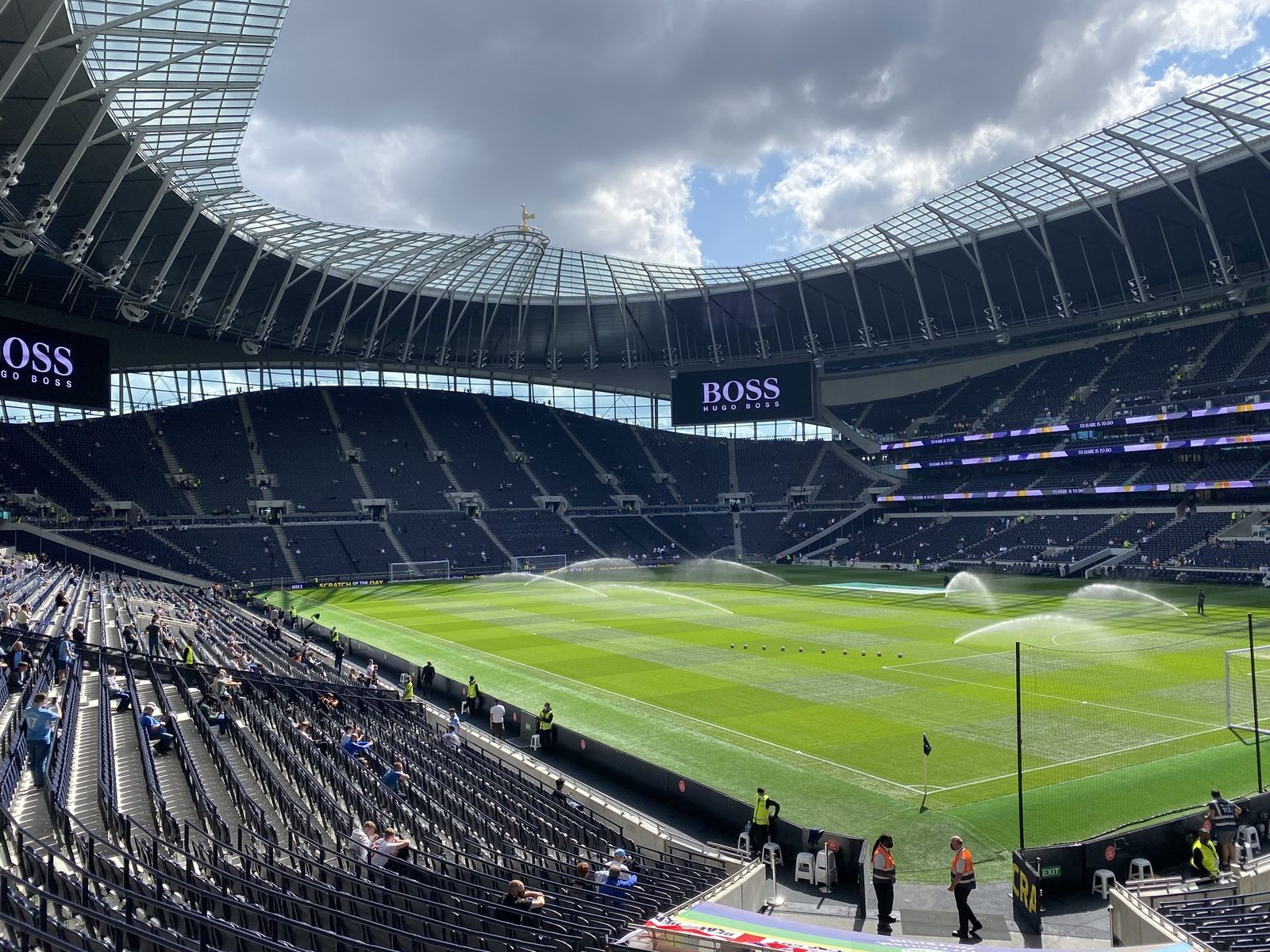
Munich is a different kind of pleasure. The U6 to Fröttmaning is simple, the Allianz Arena glows on the horizon, and the FC Bayern Museum makes the day easy to shape for families. If you want a London trip with a sharp local identity, Arsenal in north London gives you pubs, cafés and streets that fill gradually through the afternoon, while Tottenham Hotspur offers a slick stadium visit wrapped in a proper neighbourhood feel.
Hardcore supporters may lean towards Dortmund, Rome or Milan. Groups of friends often love Barcelona, Madrid, Seville or Amsterdam because the city keeps giving before and after the game. Families tend to appreciate clean transport, strong stadium visits and relaxed planning; Newcastle United is a fine reminder that a ground in the heart of the city can make everything feel close, human and easy.
Feel the city before kick-off
The best football culture is often found before anyone has taken their seat. In Milan, the San Siro towers appear between apartment blocks, spiralling ramps curling around the concrete, while a panino con la salamella steams outside the ground. In Seville, Easter can be overwhelming in the best way: Semana Santa processions, incense in the air, brass bands echoing through narrow lanes, torrijas in bakery windows and late tapas before or after Betis or Sevilla.
Madrid has its own theatre. Near Plaza de los Sagrados Corazones, the “Busiana” team-bus welcome can turn a street into a wave of sound, then the Bernabéu Market pulls you back into food, glass and city light. A derby weekend can be unforgettable, but for a first city break with football, a standard league game often gives you more room to breathe.
That applies in Britain too. The walk to West Ham United has East London grit and riverside space, while Crystal Palace feels proudly local from the streets around Selhurst Park. For sound, colour and ritual, Celtic in Glasgow shows how a city can build towards the evening one song at a time.
Plan smart, travel smoothly
Good football trip planning does not kill the romance; it protects it. Rome is a perfect example. The Stadio Olimpico has no metro station right beside it, so you need time for the metro, tram and the walk via Flaminio or Ponte Milvio. Amsterdam is far simpler, with Metro 54 taking you towards Amsterdam Bijlmer ArenA or Strandvliet. In Seville, Semana Santa crowds can slow walking routes and make central hotels more sought after.
Confirmed fixtures are your friend, especially for derbies, title run-ins and high-demand grounds. Official match ticket access matters here, and our ticket guarantee adds welcome security without taking over the story. The flight, a carefully selected hotel and entry to the game should support the journey, not become the journey.
For English trips, Manchester City can pair smoothly with a weekend in a lively northern city, while Chelsea in west London fits naturally around museums, restaurants and a slower Sunday morning. If league plans shift, the Carabao Cup calendar is another reminder that spring plans work best when you stay open to the shape of the season.
Choose the date with care, choose the city with feeling, and let the game be the glowing centre of a wider escape. That is when an Easter break becomes more than a fixture on a screen. It becomes warm pavements, crowded platforms, local food, songs in the distance and the slow walk back under stadium lights.