
Guide to Football Clubs in London: A Fan’s Travel Guide
London feels built for football wandering: railway bridges shaking above side streets, corner bars steaming up before kick-off, riverside paths under plane trees, red-brick terraces, huge arenas and old grounds tucked into neighbourhoods that each tell a different story. There is no single football identity here. Fulham Road feels nothing like Tottenham High Road, Stratford has a different pulse from Bermondsey, and Selhurst carries its own south London edge. If you are comparing the many football clubs in London and wondering where your football trip to London should begin, think less about league tables and more about the day around the game: the streets, the food, the journey in, the songs you hear before you see the ground. We have helped more than 50,000 travellers build trips around football since 2008, and London remains one of the best cities anywhere for choice, especially when official access, clear planning and a ticket guarantee give the trip a calmer start.
Find your London football fit
A good London football guide starts with neighbourhoods. Around Chelsea at Stamford Bridge, the day is compact and west London polished, but still full of old-school detail. Fulham Road fills with royal-blue shirts, burger stalls smoke near the entrances, hotel lobbies suddenly become part of the pre-game flow, and The Butcher’s Hook sits nearby with the founding story of Chelsea FC still attached to its walls.
A short distance away, Fulham at Craven Cottage gives you a softer, river-led version of the city. You arrive by Putney Bridge, walk through Bishop’s Park, feel the Thames air lift off the water, and follow “The Green Mile” until the old brick and the Cottage pavilion appear beside the trees. It is heritage without needing to shout about it.
Then there is Tottenham Hotspur in N17, where London’s largest club ground holds 62,850 and the whole area seems to gather along Tottenham High Road. Inside, Beavertown Brewery, The Goal Line bar and the huge South Stand create a very different rhythm: bigger, louder, more urban, with food from half the world within a few minutes’ walk.
If you want a tighter local feel, Brentford near Kew Bridge brings you close to the river and west London residential streets, while Crystal Palace at Selhurst feels rawer and more enclosed, with the train ride south adding to the sense that you have crossed into another football world.
Time the biggest London games
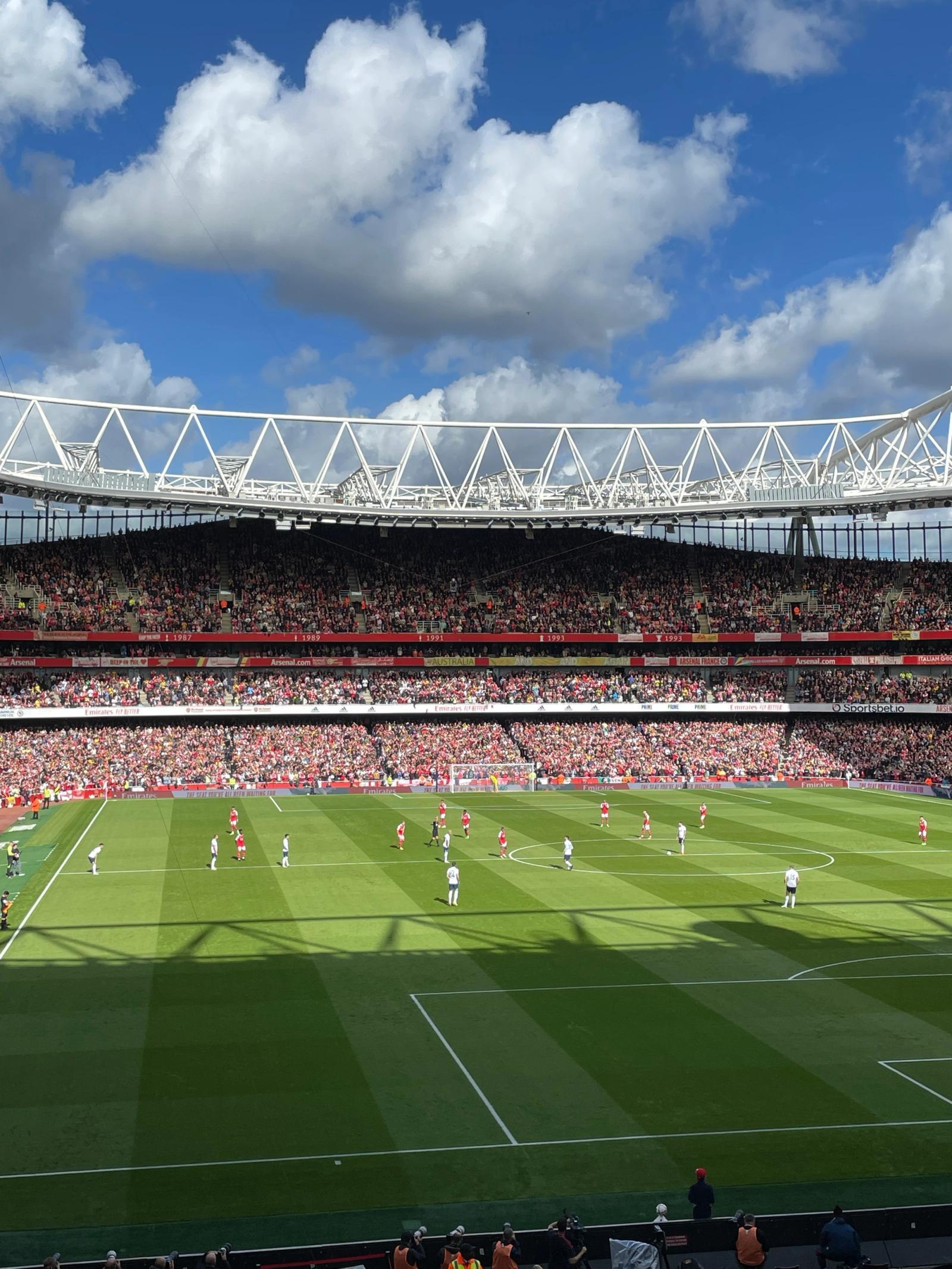
When you go matters almost as much as where you go. The North London derby between Arsenal in Islington and Tottenham is the city’s most globally recognised rivalry, but it is rooted in very local history: Arsenal’s move from Woolwich in 1913, then the 1919 First Division controversy that sharpened the divide. On these days, demand rises early, stations feel tighter, police lines are more visible and the whole north side of the city seems to lean forward.
Another rivalry story sits across the Thames. West Ham United in Stratford and Millwall at The Den rarely meet in league play now, but the history is fierce, built around old docklands identities on opposite banks. Stratford’s Olympic Park walk and South Bermondsey’s railway arches could hardly feel more different, which is exactly why London keeps pulling football travellers back.
The west London cluster is easier on the nerves and brilliant for comparison. Chelsea, Fulham, Brentford and QPR in Shepherd’s Bush sit close enough on a map to tempt you into a weekend of contrasts. Fulham Road, Putney Bridge, Kew Bridge and Loftus Road all offer their own version of a London derby mood, even when the fixture itself is not a headline event.
Taste the day before kickoff
The best football trip usually starts before the turnstiles. Around Stamford Bridge, The Butcher’s Hook, once The Rising Sun, gives Chelsea’s origin story a physical place. Nearby bars fill steadily, blue scarves appear at crossings, and the walk toward Chelsea Gate has that west London mix of smart streets, sudden chants and people asking which way to the entrance.
Fulham’s ritual is gentler. The Eight Bells near Putney Bridge is a classic meeting point before the slow walk through Bishop’s Park. You hear shoes on gravel, see white shirts between the trees, catch the breeze off the Thames, and then Craven Cottage appears almost like a riverside secret. It is one of the most beautiful approaches in English football.
Millwall is less polished and more direct. South Bermondsey station, the controlled walk, railway arches and the low shape of The Den make for a day that feels far from tourist London. Add pie and mash nearby, or the Bermondsey Beer Mile if timing works, and you get a sharper taste of local London matchday culture without dressing it up.
Arrive smoothly, enter confidently
London rewards simple planning. For Chelsea, the District line to Fulham Broadway keeps things straightforward. Arsenal gives you several routes: Arsenal station, Finsbury Park, Holloway Road or Highbury & Islington, depending on how much walking you want. For West Ham, Stratford, Stratford International, Pudding Mill Lane and Hackney Wick all offer different approaches through Queen Elizabeth Olympic Park. Millwall is usually South Bermondsey, with a short guided flow to The Den.
For derbies and smaller-capacity grounds, official football tickets in London are strongly recommended. Football Travel packages include flight, hotel and official match ticket access, so the practical pieces are handled before you arrive. Earlier arrival is still wise: security checks, local restrictions and busy station exits can all shape the pace of the afternoon.
If there is no game on your first day, London still keeps you close to the story. Visit the Arsenal Museum and wander around Highbury Square, take the Chelsea Museum and Stamford Bridge route, follow the London Stadium path through the park, or go deeper with Charlton Athletic’s Back to The Valley story. However you choose, the city lets you build a football trip around far more than ninety minutes.